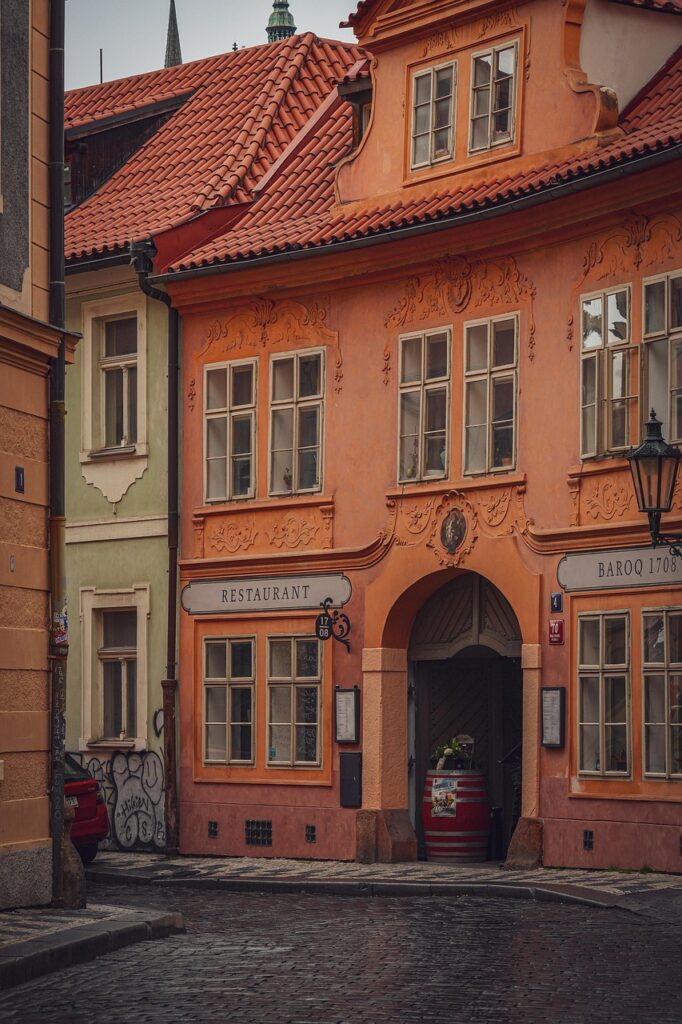






Introduction: Stone Stories — a route through Umbria’s medieval monuments
Umbria is a land of stone, green hills and hushed cloisters where the medieval era still seems to hold sway. This article offers a comprehensive, practical guide to following an itinerary of the region’s most striking medieval monuments. You’ll find precise addresses, typical opening hours, prices in euros, immersive descriptions of each site and local tips to make the most of your visit. Whether you’re an independent traveler, an architecture buff or a photographer chasing Romanesque and Gothic light, this route leads you from serene basilicas to fortresses overlooking valleys and across cobbled squares that were once stages for faith and power.
Every monument described here bears the imprint of the medieval period: round arches, ribbed vaults, inset frescoes and finely carved capitals. Some places remain active liturgical sites, while others are now museums preserving altarpieces, manuscripts and liturgical objects. You’ll also encounter remnants of walls and rocche (fortresses) that controlled roads and valleys — essential to understanding Umbrian geopolitics between competing communes and powerful families in the 12th–14th centuries.
The guide is designed to be practical: addresses are given in exact format for GPS navigation, hours reflect typical seasonal openings, and prices in euros are the publicly posted amounts (current at time of writing, but always check before you go). Each section includes local advice — where to eat without wasting precious time, the best time to arrive to avoid crowds, and which architectural details to look for to better understand the evolution of medieval style in Umbria.
Finally, the route mixes major highlights with lesser-known discoveries to create a balanced, connected itinerary: Assisi, Perugia, Spoleto, Orvieto, Gubbio and Montefalco will be our main stops, but each destination invites short detours that are well worth the trip. Lace up your walking shoes — many of these monuments are reached via cobbled lanes — and bring your curiosity; medieval Umbria reveals itself stone by stone.
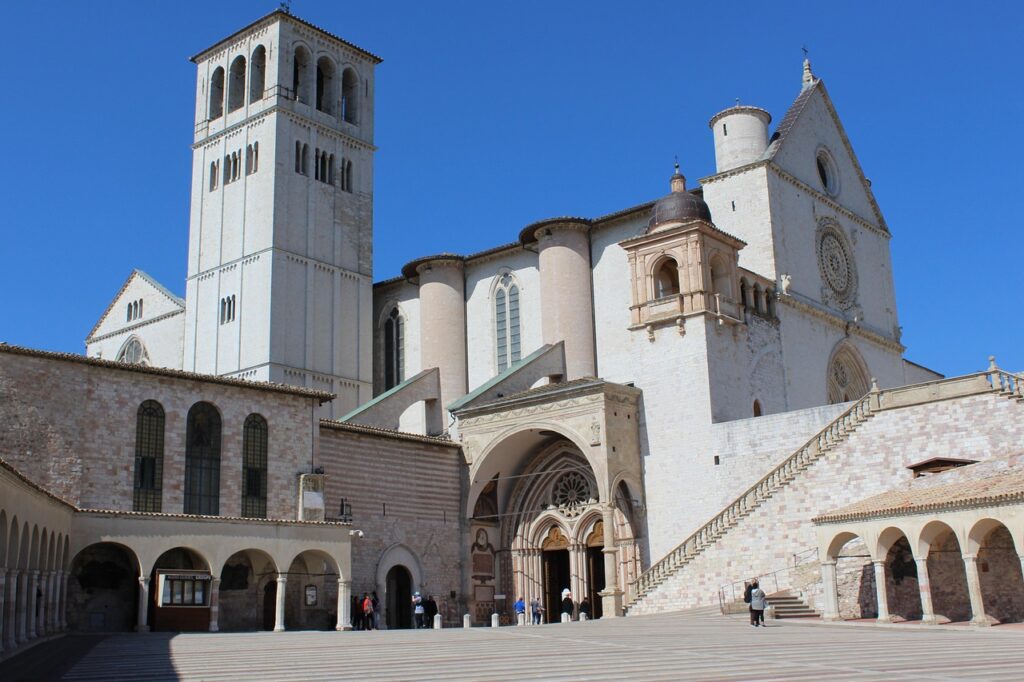
Assisi: the Basilica of Saint Francis and the ramparts — a walk into medieval piety
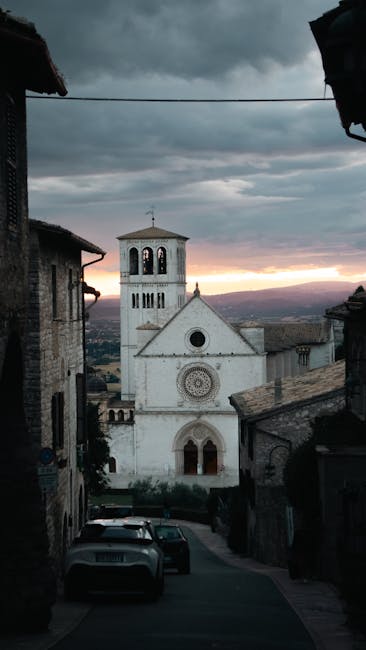
Assisi is the spiritual heart of medieval Umbria. The Basilica di San Francesco d’Assisi (Piazza San Francesco, 2, 06081 Assisi PG) is one of Italy’s most famous monumental complexes. The basilica consists of two stacked churches, the Lower Basilica and the Upper Basilica, richly decorated with frescoes by masters such as Giotto, Cimabue and Simone Martini. These frescoes narrate the life of Saint Francis and are key landmarks for understanding Italian medieval art.
Opening hours: generally the basilica is open from 07:00 to 19:00 (times vary with season and liturgy). Admission: the basilica itself is free to enter, but the Museo della Basilica e area archeologica (including the crypt and some guided-access areas) sells a combined ticket for around €6–€8 (reduced rates for students and seniors). Check the official website before your visit for service times that may restrict access to the artworks.
- Practical tip: arrive early in the morning (between 08:00 and 09:30) to enjoy the frescoes in soft light and avoid tour groups and pilgrims.
- Don’t miss: the crypt housing Saint Francis’s tomb, and the view from the upper terrace overlooking the Spoleto valley.
- Where to eat: for an authentic coffee, head to the Piazza del Comune in the old town and look for a local trattoria to sample Umbrian cucina povera: homemade pasta, chestnuts and local cheeses.
Nearby, the fortress Rocca Maggiore (Via della Rocca, 06081 Assisi PG) is reachable by a 20–30 minute walk from the basilica. Opening hours: typically 09:00–18:00 (high season); Admission: around €6, €3 reduced. The Rocca offers a walk along battlements, breathtaking panoramas and a tangible sense of the defensive role of medieval lords. The fortress’s paths and stairways still show traces of successive repairs, and the view helps you grasp the strategic layering between Umbria, the Apennines and the via Francisca.
Perugia and the Rocca Paolina: an underground citadel and civic art
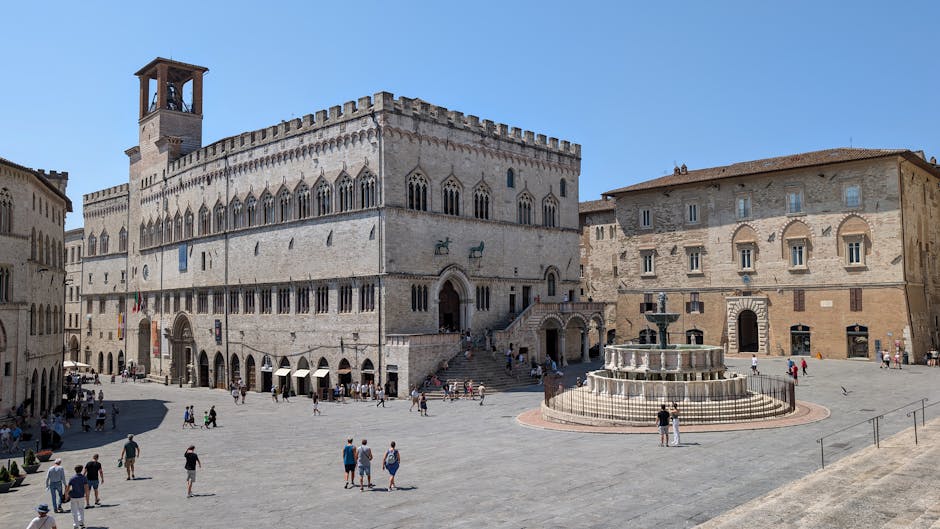
Perugia is a city where medieval and modern intertwine. Its historic center preserves outstanding examples of medieval civil and religious architecture. Start with the Cattedrale di San Lorenzo (Piazza IV Novembre, 06123 Perugia PG), which dates back to the medieval period but has been modified over the centuries. The cathedral sits on the main square, facing the Fontana Maggiore and the Palazzo dei Priori, the historic seat of communal power.
Opening hours: the cathedral is generally open from 09:00 to 12:00 and 15:00 to 18:00; often closed during services. Entry is free, though certain chapels or adjacent museums may charge a small fee (around €3–€5).
Don’t miss the Rocca Paolina (Ingresso da Piazza Italia, 06121 Perugia PG), a punitive citadel built in the 16th century by Pope Paul III atop medieval structures, now an open network of underground passages. Opening hours: 09:00–19:00 in season; Admission: most areas are free, €3 for guided tours and temporary exhibitions. Visiting the Rocca is an immersive experience: you pass through layers of stone archaeology, vaults and buttresses, sensing how papal power reshaped the medieval city.
- Palazzo dei Priori (Piazza IV Novembre, 06123 Perugia PG): the historical seat, now the civic museum. Opening hours: 09:00–19:00; Admission: around €7 for the full civic museum, with reductions available.
- Photo tip: Piazza IV Novembre in the morning offers strong contrasts between warm stone and sky — perfect for capturing the reliefs on the Palazzo dei Priori façade.
- Where to eat: try a tartufo (ice cream with a chocolate core) at an artisan gelateria near Corso Vannucci.
Perugia is also a jumping-off point for medieval excursions to hilltop villages. The city itself needs at least a half-day to absorb the mix of communal palaces, churches and lanes clinging to the hillside. Look for small chapels and oratories tucked in alleys that preserve frescoes and medieval inscriptions rarely seen on major routes.
Spoleto, Montefalco and Gubbio: fortresses, cathedrals and medieval squares
This central-southern axis of Umbria brings together essential stops for anyone fascinated by the Middle Ages. Spoleto and its Cattedrale di Santa Maria Assunta (Piazza della Libertà, 06049 Spoleto PG) house remarkable fresco cycles. Opening hours: usually 09:00–18:00; Admission: €3–€5 depending on exhibitions. The Rocca Albornoziana (Via degli Scalzi, 06049 Spoleto PG) dominates the town and showcases exemplary military architecture. Hours: 09:00–19:00 in summer; Admission: €5–€7.
In Montefalco, the Complesso Museale di San Francesco (Piazza San Francesco, 06036 Montefalco PG) preserves the famous cycle by Benozzo Gozzoli and other medieval and Renaissance paintings. Opening hours: 10:00–18:00; Admission: around €6 for the museum and the Church of Saint Francis. Montefalco is also a great gastronomic stop: the local wine tradition (especially Sagrantino di Montefalco DOCG) nicely complements a visit to the religious artworks.
- Tip: combine Spoleto and Montefalco in one day: Spoleto in the morning to enjoy the cathedral with fewer visitors, Montefalco in the afternoon for golden light and a wine tasting at day’s end.
- Where to stay: choose a guesthouse or agriturismo in Montefalco for a nighttime immersion away from tourist flows; low light pollution makes for peaceful evening strolls after dinner.
Gubbio is another medieval gem with its communal palace, the Palazzo dei Consoli (Piazza Grande, 1, 06024 Gubbio PG). Opening hours: 09:00–18:00 depending on season; Admission: €5–€8 depending on exhibitions and access to the lapidary museum. Piazza Grande is a textbook medieval square, dominated by a loggia and steps that offer spectacular views over the roofs and surrounding woods.
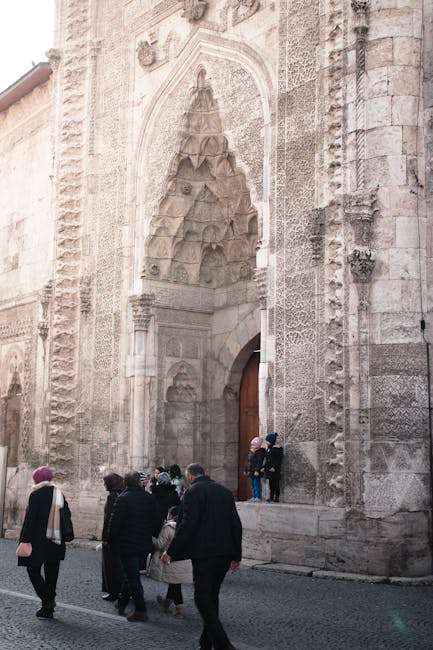
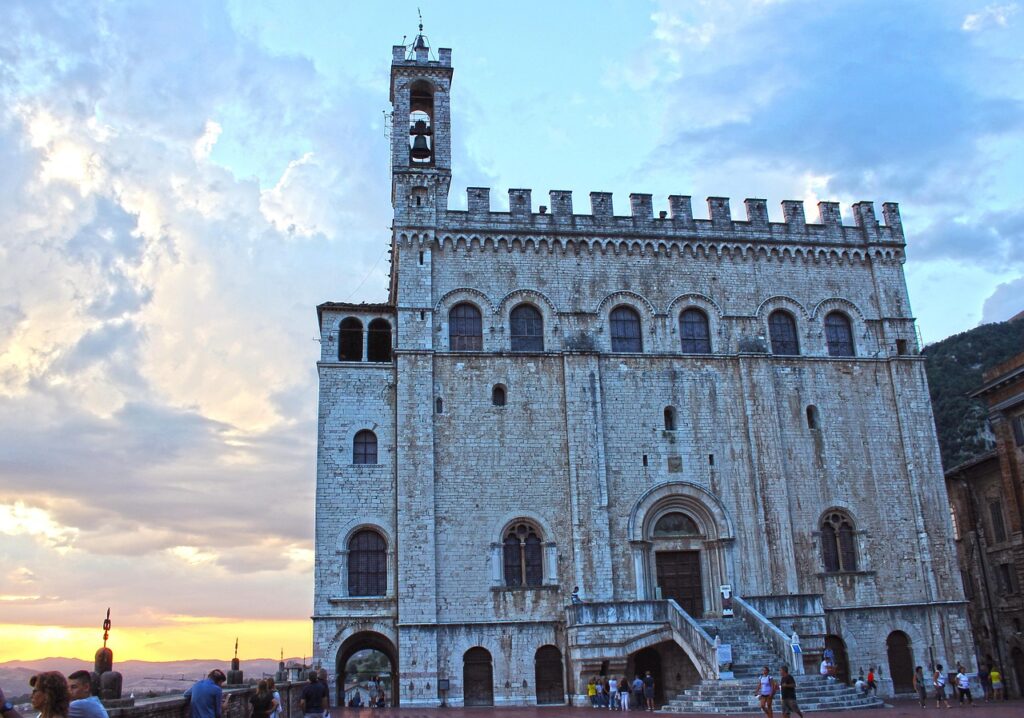
Each of these towns reveals historical layers: small chapels, Gothic remodelings, sculpted portals and traces of everyday medieval life. The attentive visitor will notice differences in scale and decoration between civic and religious buildings: cathedrals display artistic ambition and devotion, while palaces and rocche testify to a more pragmatic power focused on controlling roads and levying taxes.
Orvieto and side routes: the cathedral, the funicular and small wonders
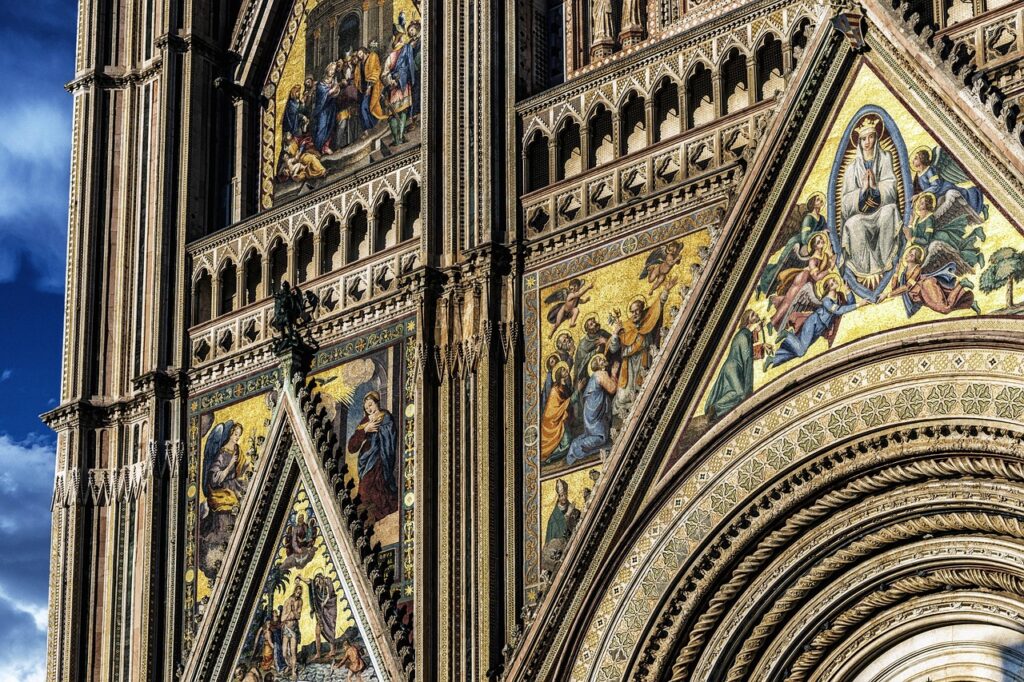
Orvieto, although on Umbria’s southwestern edge, is a must for anyone interested in medieval architecture. The Duomo di Orvieto (Piazza Duomo, 1, 05018 Orvieto TR) is famed for its polychrome façade and reliefs; inside you’ll find major chapels and frescoes. Opening hours: generally 08:30–19:00; Cathedral admission: a voluntary donation for main access, but the Museo dell’Opera del Duomo and the Pozzo di San Patrizio (Pozzo di San Patrizio, Piazza Cahen, 05100 Orvieto TR) require separate tickets: museum ~€6, Pozzo ~€5–€7.
Access to the town is often via the funicular (Funicolare di Orvieto, Piazzale Marconi, 05018 Orvieto TR). Funicular fare: around €1.40–€2 per trip. Orvieto offers exceptional views over the valley and its tufaceous cliffs where medieval walls and houses cling — a sculpted landscape that explains the city’s strategic importance in the Middle Ages.
- Practical tip: visit the Duomo early or late in the day to avoid cruise-ship crowds coming from Lake Trasimeno and to enjoy the low-angle light on the façade.
- Side route: from Orvieto, take a detour to the rock-cut site of the Parco Archeologico and the trails along the valley to see medieval remains and ancient sundials.
- Where to eat: Via del Duomo is full of small osterie serving regional dishes: try pici (thick pasta) with a game sauce for a medieval-inspired culinary experience.
These final stops round out the itinerary by offering a mix of cathedral grandeur and defensive landscapes. Orvieto and its monuments show how stone was used not only for devotion but also to stage urban power. You’ll come away with a fuller understanding of medieval Umbria, both spiritually and strategically.
Conclusion: thinking and walking medieval Umbria
Exploring medieval Umbria means adopting a different rhythm: walking follows the lines of the walls, a stop marks the entrance to an apse, a pause becomes a long contemplation of an almost-forgotten fresco. The monuments presented here — the basilica of Assisi, the rocche of Assisi and Spoleto, the Rocca Paolina in Perugia, the museums and palaces of Gubbio, Montefalco and Orvieto — form a network of places where stone tells stories of faith, architecture and power. The prices listed here (museum entries averaging €3–€8, some basilicas free) reflect common public rates and should be checked before departure, especially during tourist seasons or religious and cultural events that often alter opening hours.
Final tips: allow at least three to four days for a thorough itinerary, wear shoes suited to cobbles and tufaceous paths, and always carry some cash for admissions, donations and the funicular. Look out for morning services to hear Gregorian chant or local offices — a living way to sense how these spaces were used historically. And talk with locals: grocers, local guides and restaurateurs often share anecdotes and information you won’t find in guidebooks, revealing details about recent restorations, planned repairs and paintings sometimes hidden behind altars.
Thus this route through Umbria does more than list monuments; it proposes an approach: observe the stone, listen to the stories and soak up the atmospheres. Each town adds clues for reading the Middle Ages: fragmented architecture, reused Romanesque elements in Gothic façades, underground passages and defensive pits. This journey is an invitation to slow down — to read history in stone, not as mere scenery, but as a text to be read, stone by stone.