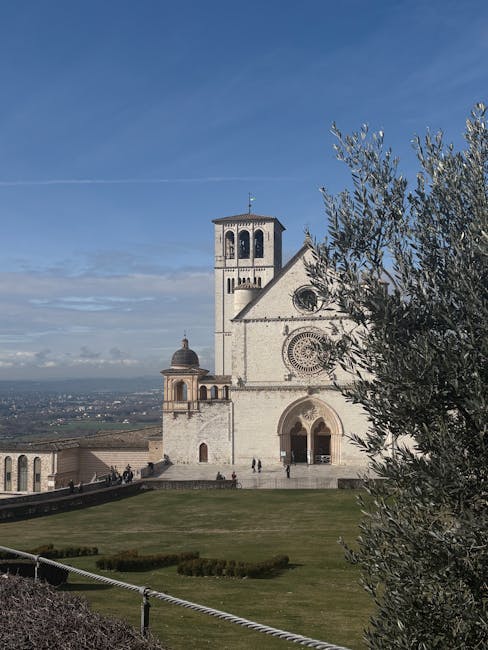






Introduction: Unveiling the Secrets of the Basilica of Saint Francis
In the heart of Umbria, in the medieval town of Assisi, the Basilica of Saint Francis of Assisi (Basilica di San Francesco d’Assisi) has stood as a spiritual and artistic beacon since the 13th century. The church is more than a place of worship; it’s an open book of religious history, Franciscan faith, medieval Italian art, and the human tensions that shaped Christianity. The stones of its vaults, the frescoes that decorate its walls, and the crypt that holds Saint Francis’s remains tell complex stories where devotion, politics, and artistic genius intertwine. This article offers a detailed, immersive exploration of the basilica: from its two-tiered architecture (upper and lower basilicas) to the storytelling palette of the frescoes, the crypt, the adjoining museums, and the lesser-known secrets that only attentive visitors notice.
More than a practical guide, I invite you to delve into the mysteries surrounding the building — why certain frescoes were attributed to particular studios, how Saint Francis’s tomb became both an object of veneration and controversy, what clues medieval pilgrims left behind, and which sensory and spiritual experiences often leave a lasting mark on today’s visitors. Umbria itself, an inland, verdant region, provides a unique setting that enhances the timeless feeling when you climb the alleys up to the basilica’s main square. The bells, liturgical chants, the scent of wood and incense, and the light filtering through the stained glass create an atmosphere conducive to reflection.
In this full HTML article, I’ll provide not only immersive descriptions and analysis but also essential practical information: exact addresses, opening hours, prices in euros, local tips, and recommendations to make the most of your visit. Visual markers 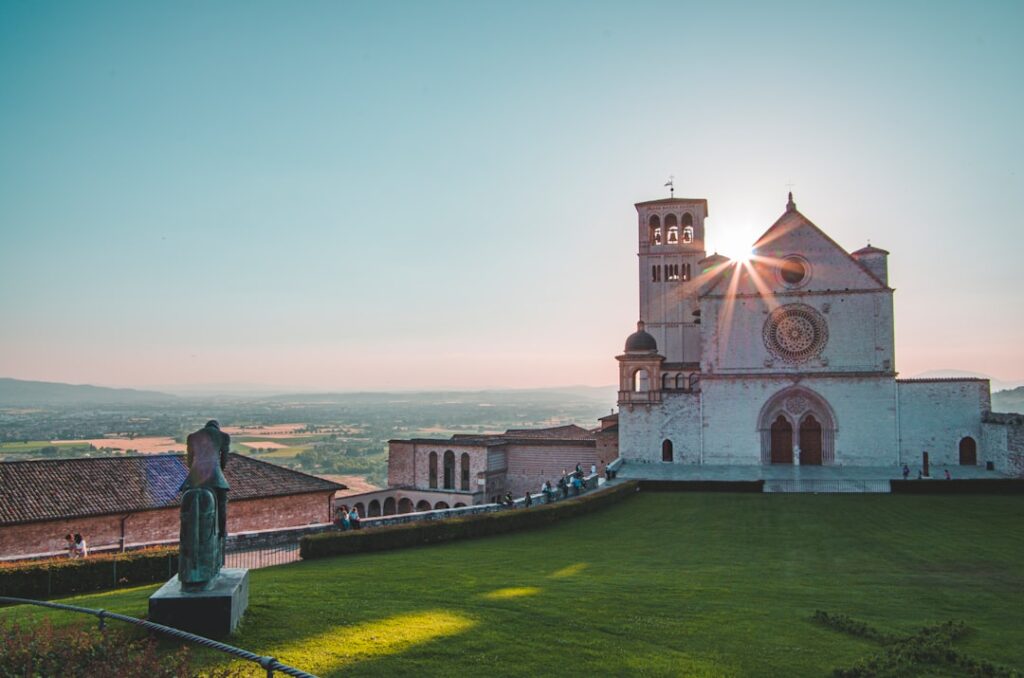 will punctuate the text to help you picture each scene: the façade, the interior, the crypt, fresco details, and the views from the terraces. Whether you’re a pilgrim, an art lover, or a curious traveler, get ready to discover the layers of the sacred and the human that make the Basilica of Saint Francis a place of mystery and emotion.
History and Architecture: Between Spirituality and Medieval Power
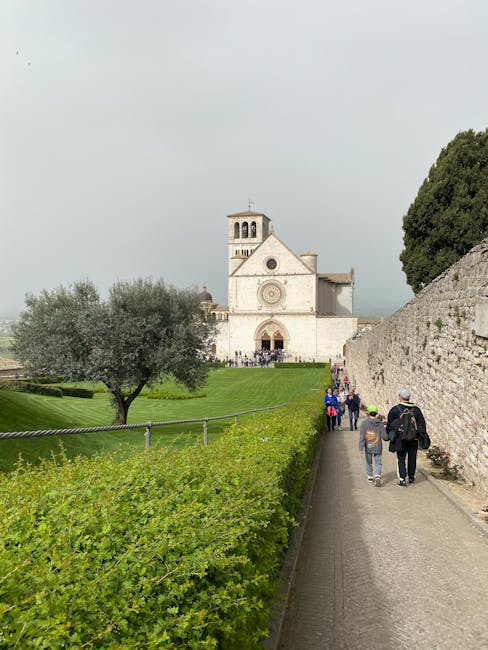
The Basilica of Saint Francis of Assisi was built shortly after Francis of Assisi was canonized in 1228. Construction began in 1228–1229 and continued for several decades, producing a unique architectural ensemble made up of two superimposed churches — the Upper Basilica and the Lower Basilica — and the adjoining Sacro Convento (the sacred convent). The main address is Piazza San Francesco, 2, 06081 Assisi PG, Italy, a spot that overlooks the lower town and quickly became a focal point for pilgrims and visitors.
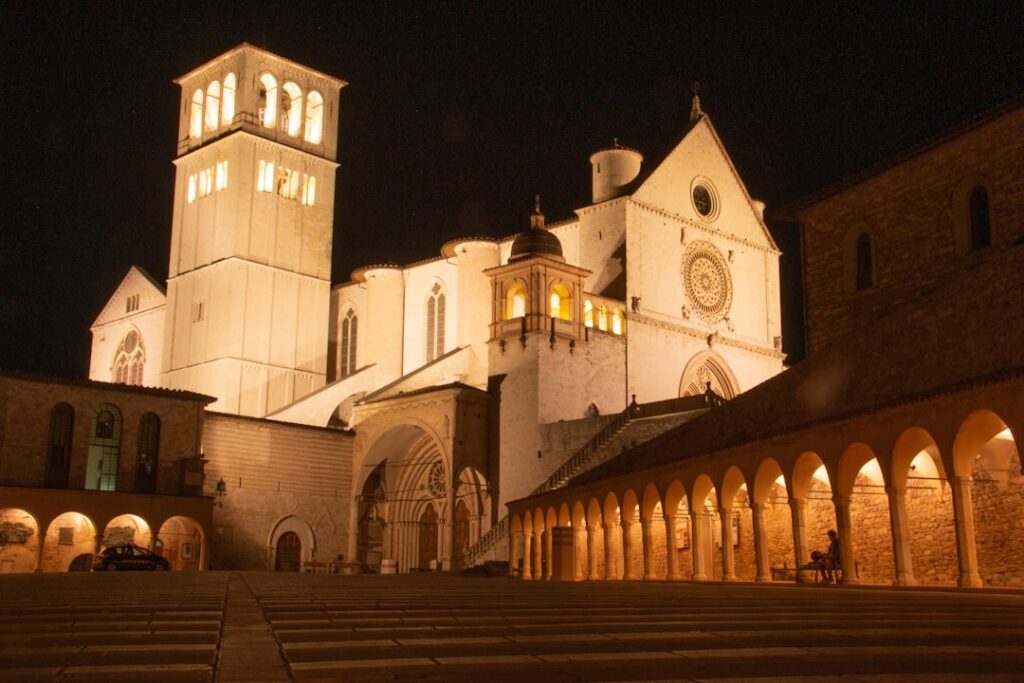
The two-level layout serves both symbolic and practical purposes: the lower basilica, darker and more intimate, was designed to hold the saint’s remains and allow popular veneration, while the upper basilica, brighter and more open, was intended for communal prayer and liturgical celebrations. Built on a sloping site, the foundations use local stone that gives the building a warm, rugged hue typical of Umbria. The façades and portals are modestly decorated, reflecting the Franciscan spirit of early austerity, although the interior reveals a remarkable pictorial richness.
Architects, master builders, and patrons came and went, sometimes reflecting divergent aesthetic sensibilities: Lombard, Tuscan, and local influences can be found in the arches, ribs, and the capitals’ scrollwork. The establishment of the Sacro Convento (Convent of Saint Francis) beside the basilica transformed the site into an intellectual and spiritual center, helping to spread Franciscan ideas across Europe. Today the basilica is a UNESCO World Heritage site (part of « Assisi, the Basilica of San Francesco and Other Franciscan Sites ») and continues to attract scholars, artists, and the faithful.
The Frescoes and the Artistic Debate: Giotto, Cimabue and the Workshops
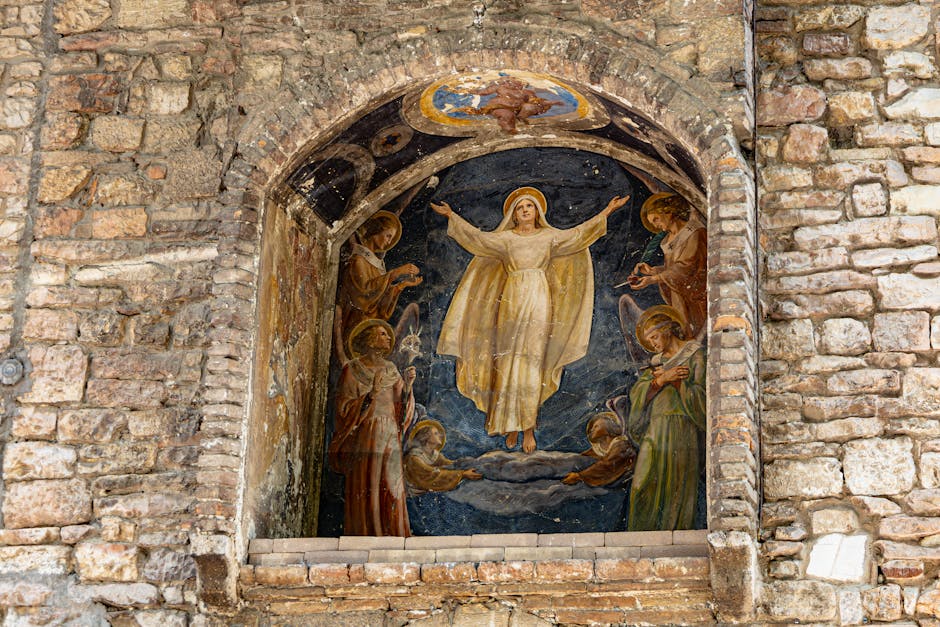
One of the basilica’s major attractions is its fresco cycle — a true pictorial treasure from the Middle Ages. The walls and vaults of both levels are covered with biblical and hagiographic scenes: the life of Christ, the life of Saint Francis, and various hagiographical episodes meant to instruct and move the faithful. Names that appear repeatedly in art-historical studies include Giotto di Bondone, Cimabue, Pietro Cavallini, and numerous anonymous workshops. The authorship of certain works is still debated — a controversy that only deepens the place’s aura of mystery.
The upper basilica contains several cycles traditionally attributed to Giotto (early 14th century), although recent research has nuanced these attributions and suggested the involvement of multiple workshops influenced by the period’s naturalistic revolution. The frescoes depicting the life of Christ are particularly striking for their sequential storytelling and expressive power. The colors, even if altered by time and successive restorations, retain an intensity that captures the eye and communicates the characters’ physiognomy — gestures, glances, drapery — in an almost cinematic way.
The lower basilica houses older, more intimate cycles, with scenes from Saint Francis’s life and images meant to inspire meditation. The iconographic details (nature, animals, architectural instruments) provide a rich symbolic repertoire for historians and attentive visitors alike. Modern restorations have revealed varied techniques and materials — natural pigments, plaster-based preparations, layers of polychromy — revealing the ingenuity of anonymous masters. Contemplating these frescoes in the basilica’s hushed atmosphere creates an experience that blends aesthetic emotion with spiritual depth.
The Crypt, Saint Francis’s Tomb and Reported Miracles
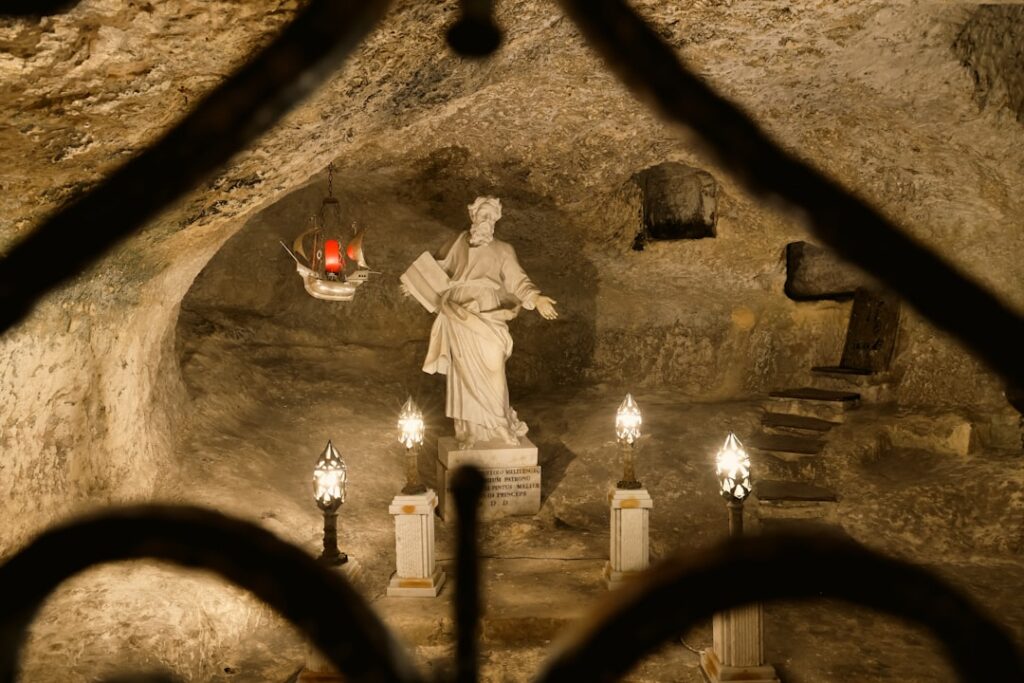
Descending into the crypt of the Basilica of Saint Francis is like crossing a threshold between history and devotion. The crypt contains Saint Francis of Assisi’s tomb and forms the complex’s sacred heart. The access address for the crypt is the same as for the basilica: Piazza San Francesco, 2, 06081 Assisi PG, Italy, and the entrance is through the lower spaces of the basilica. Pilgrims flock here to leave ex-votos, pray, and seek a physical closeness to the saint.
The tomb, small and modest, contrasts with the basilica’s overall scale. Since the discovery of the relics in the 13th century, numerous accounts of healings and miraculous interventions have been recorded by local congregations. These testimonies, frequently kept in the Sacro Convento‘s archives, fueled popular fervor and reinforced Assisi’s reputation as a pilgrimage center. The crypt itself, with its dim atmosphere, low vaults, and scent of incense, invites contemplation. It’s easy to understand why so many faithful regard this spot as a meeting point between the divine and the human.
Practical note: access to the crypt can sometimes be restricted during religious ceremonies or restoration work. Generally, the crypt is open in the morning and afternoon; hours and fees may vary by season. Visitors seeking a deeper immersion are advised to check mass and office schedules in advance (often in Italian and occasionally in Latin) to avoid restricted periods and, if possible, attend a service — an experience that brings the place vibrantly to life.
Practical Tips for Visiting: Addresses, Hours, Prices and Smart Advice
Visiting the Basilica of Saint Francis requires a bit of planning: opening hours, tickets, high-season access, and behavioral rules are all important to know to fully enjoy the experience. Below is a practical, up-to-date summary for guidance — always double-check before you travel, as times and prices can change.
Address and Contacts
- Full name: Basilica Papale di San Francesco d’Assisi (Papal Basilica of Saint Francis of Assisi)
- Address: Piazza San Francesco, 2, 06081 Assisi PG, Italy
- Phone (Sacro Convento): +39 075 812 050 (indicative number, check by season)
Opening Hours (indicative)
- Upper Basilica: usually open from 08:30 to 19:00 every day. May close for religious ceremonies.
- Lower Basilica: usually open from 06:30 to 19:00; the crypt may have specific time slots.
- Crypt / Tomb: often accessible 07:00–12:30 and 15:00–18:00; hours vary with services.
- Museo della Basilica and Sacro Convento: generally 09:00–18:00 (closing times vary by season).
Prices (indicative in euros)
- Basilica entry: free access to common areas (donations recommended).
- Combined ticket (Museum, crypt, guided access): around €5–€10 depending on options and discounts (students, seniors, groups).
- Official guided tour: roughly €8–€12 per person depending on language and duration.
- Donations and ex-votos: amounts vary — it’s customary to leave a small gift for conservation.
Local tips: arrive early (before 09:00) to avoid the crowds and enjoy the morning light that flatters the frescoes in the upper basilica. Dress modestly (shoulders and knees covered) out of respect for this place of worship. Photography inside may be allowed but without flash — follow posted signs. If you’d like to attend a mass, check the notice boards at the entrance or the Sacro Convento’s official site for up-to-date schedules.
Hidden Corners and How to Extend Your Visit in Umbria
After touring the basilica, the town of Assisi and its surroundings offer a range of complementary experiences. Don’t miss the Sacro Convento and its library, often rich in medieval manuscripts; the Piazza del Comune and the Cathedral of San Rufino (Via San Rufino, 10, 06081 Assisi PG) are also worth a visit to understand the city’s religious layout.
For a tasty break, try Umbrian specialties: slices of ciauscolo (spreadable sausage), bruschetta with local olive oil, truffle dishes, or a plate of homemade pasta paired with a glass of Sagrantino (wine from Montefalco) if you head into the countryside. Local-recommended restaurants (check availability) include Trattoria degli Umbri – Via San Francesco 10 and Osteria Piazzetta dell’Erba – Piazza del Comune 5. Addresses change, but asking locals or Sacro Convento staff often leads to authentic finds.
If you want to extend the trip, nearby excursions include the Rocca Maggiore (Piazza della Repubblica, 1, 06081 Assisi PG), the Basilica of Santa Chiara (Piazza Santa Chiara, 6), and Mount Subasio Park for hikes that offer suspended panoramas across Umbria. Wear comfortable shoes for the cobbled streets and bring water, especially in summer.
Conclusion: Why the Basilica of Saint Francis Remains a Place of Mystery and Emotion
The Basilica of Saint Francis of Assisi is not just a historical monument; it’s a living space where art, faith, history, and everyday life meet. The mysteries that surround it — debated artistic attributions, miracle accounts, successive layers of devotion and restoration — are part of its deep charm. Stepping through its doors, a visitor enters a temporal continuum where voices from the past still echo in the chants, the frescoes, and the very walls of the building.
Practically speaking, the basilica remains accessible: its exact address (Piazza San Francesco, 2, 06081 Assisi PG, Italy), hours and prices (subject to change) allow for an informed and respectful visit. The recommendations here — arrive early, respect the place, check service times, and favor a guided tour to deepen your reading of the pictorial cycles — are designed to enrich your experience. Beyond practicalities, it’s the chance encounters — a friar in the cloister, an enthusiastic guide, a particular light on a fresco — that give meaning to the visit.
Finally, remember that the Basilica of Saint Francis is deeply tied to its landscape: Umbria, with its hills, olive groves, and villages, extends the visit with a sense of balance and simplicity that was at the heart of Franciscan teaching. Whether you come as a believer, an art historian, or a traveler in search of emotion, let the stories suggested by the stones carry you, and take the time to listen to the silence — it’s often there that the finest mysteries are revealed.