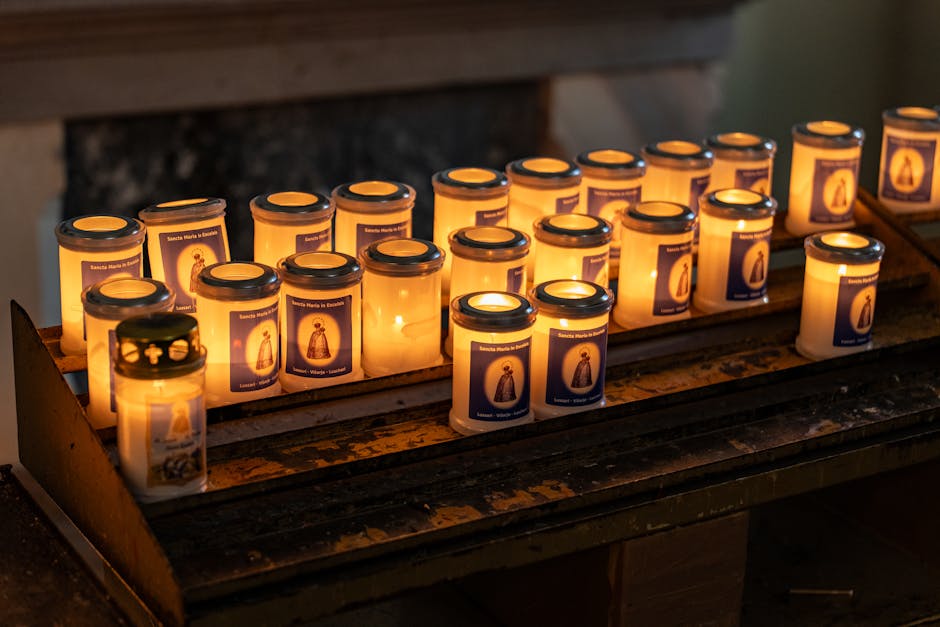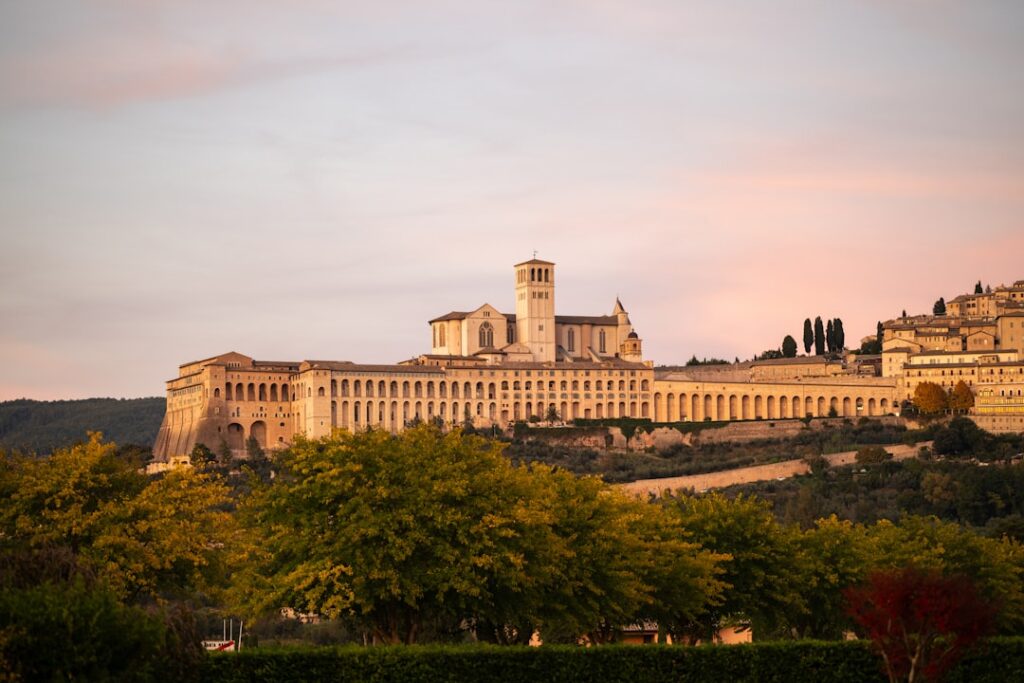






Introduction: Sacred art in Assisi — frescoes and devotion in the heart of Umbria
Assisi, a small town perched on Umbria’s green hills, is one of the great centers of Christian spirituality and Italian medieval art. More than a collection of churches and monuments, Assisi is an open-air museum where devotion and painted creativity meet to tell the story of Saint Francis and Franciscan spirituality through fresco cycles, decorated chapels and intimate sanctuaries. The frescoes here are not mere artworks: they are instruments of spirituality, designed to teach, move and guide the prayer of the faithful.
This guide is aimed at both art-history lovers and pilgrims seeking moments of quiet reflection. We’ll explore the key sites that concentrate the most famous mural paintings — describing exact locations, opening hours, admission prices and practical tips for visiting — and offer itineraries and local tips to get the most out of each stop. Expect immersive descriptions: the solemn dimness of the Upper and Lower Basilicas of San Francesco where Giotto and Cimabue (and their workshops) left an indelible mark; the moving simplicity of the Basilica of Santa Chiara and the famous San Damiano crucifix; the scented solitude of the Eremo delle Carceri, refuge of the early friars minor.
In Umbria, light plays a crucial role: it reveals aged pigments, highlights gilding, and changes the look of frescoes with the time of day. We’ll point out the best time slots for photos or contemplative visits, as well as practical details — exact addresses, combined tickets, discounts, and tips to avoid crowds in high season. You’ll also find local recommendations: where to enjoy a zuppa umbra after a morning of devout wandering, how to reach the sanctuaries from Assisi train station, and how to respect sacred places (dress, silence).
The images attached to this guide (indicated by markers 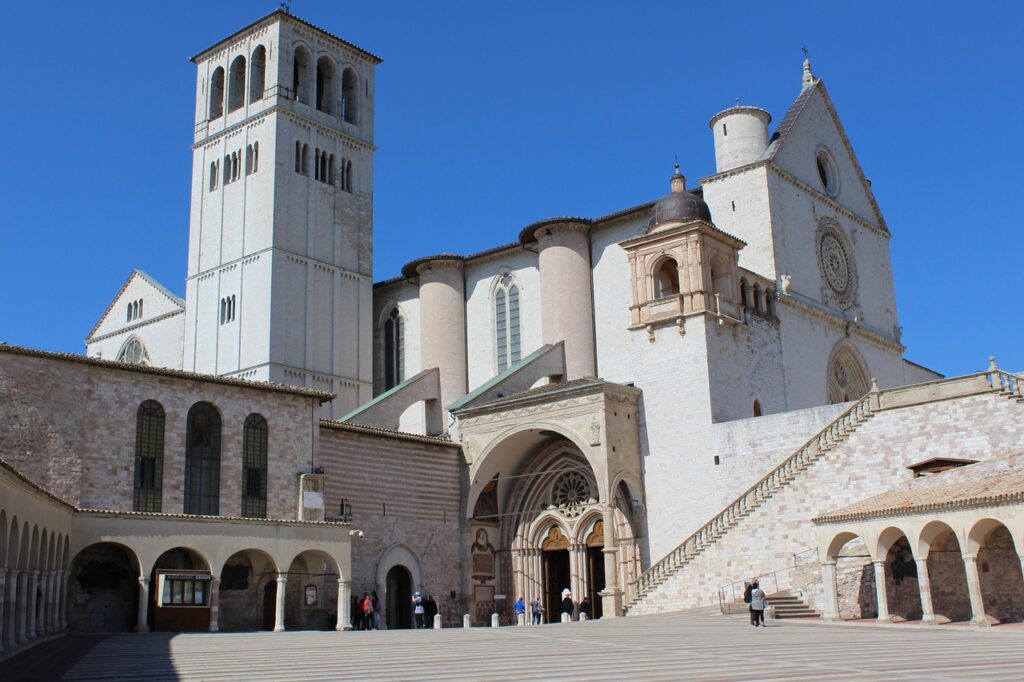 with visual keywords in English) will help you locate sites before you arrive: close-ups of Giotto’s frescoes, wide views of the Basilica, forest paths leading to the hermitage. Whether you come for art, prayer, or both, this comprehensive guide will let you approach Assisi well prepared and respectful of history and local customs. Get ready to feel the weight of time in stone and color: each fresco is a living page in a town that has blended faith and beauty for eight centuries.
Basilica di San Francesco d’Assisi: master frescoes, hours, tickets and practical tips
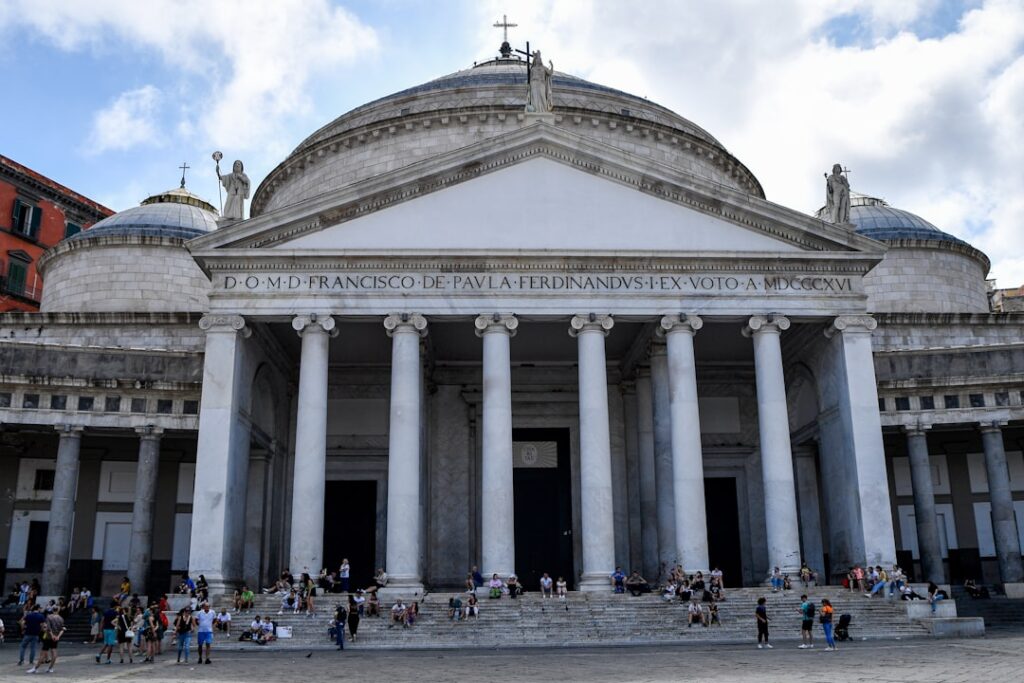
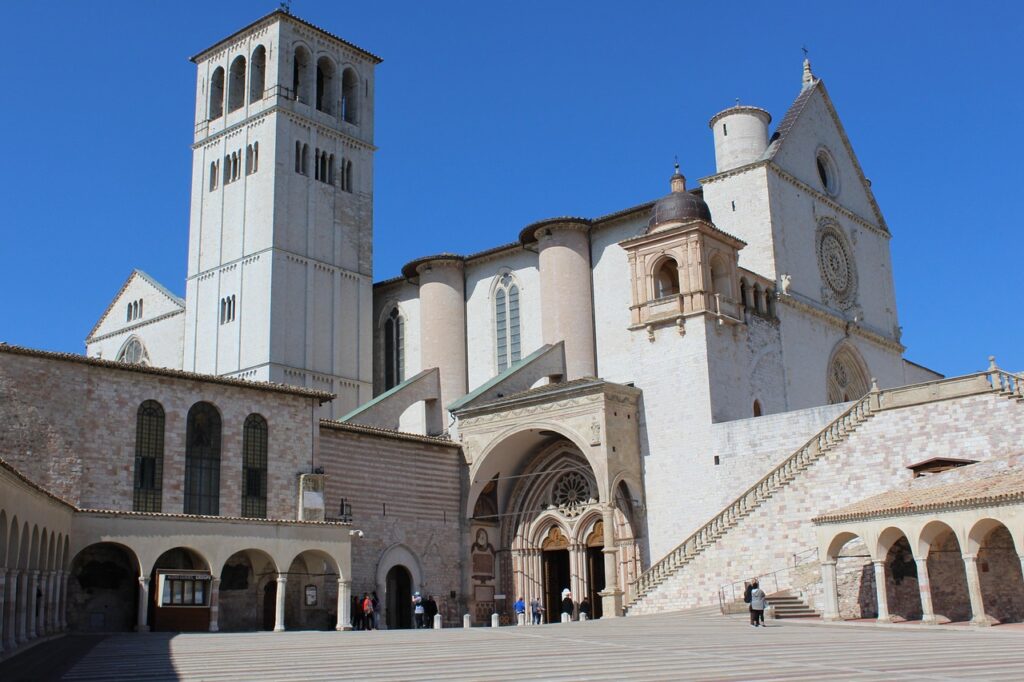
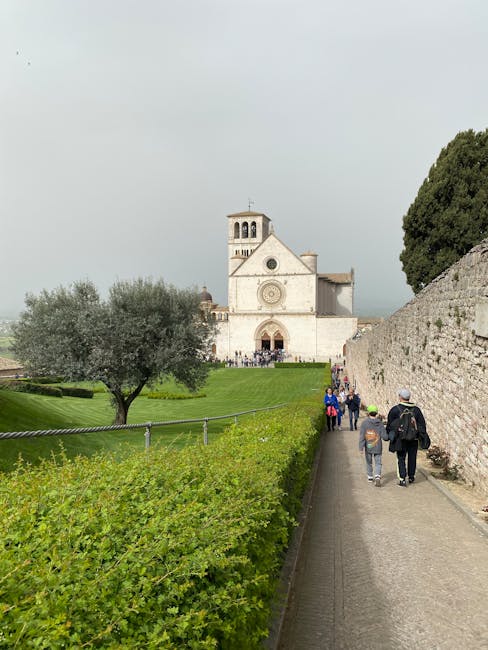
The Basilica di San Francesco d’Assisi is Assisi’s artistic and spiritual heart. It consists of two stacked levels — the Upper Basilica and the Lower Basilica — built between 1228 and the mid-13th century. Address: Piazza San Francesco, 06081 Assisi PG, Italy. The main entrance is on the piazza, a short walk from Via San Francesco and the historic center.
Typical opening hours (subject to seasonal and liturgical changes):
- Upper and Lower Basilica: 08:00 – 19:00 (April to September), 08:00 – 17:00 (October to March).
- Frequent liturgical celebrations: morning mass around 07:30 and vespers (times vary); parts of the basilica may be closed during ceremonies.
Prices and tickets (indicative rates updated for 2025 — check on arrival):
- Combined ticket Basilica (Upper + Lower) + Museo e Tesoro della Basilica: €10 per adult.
- Reduced rate (students, seniors): €7.
- Children <18 years: free entry when accompanied by an adult.
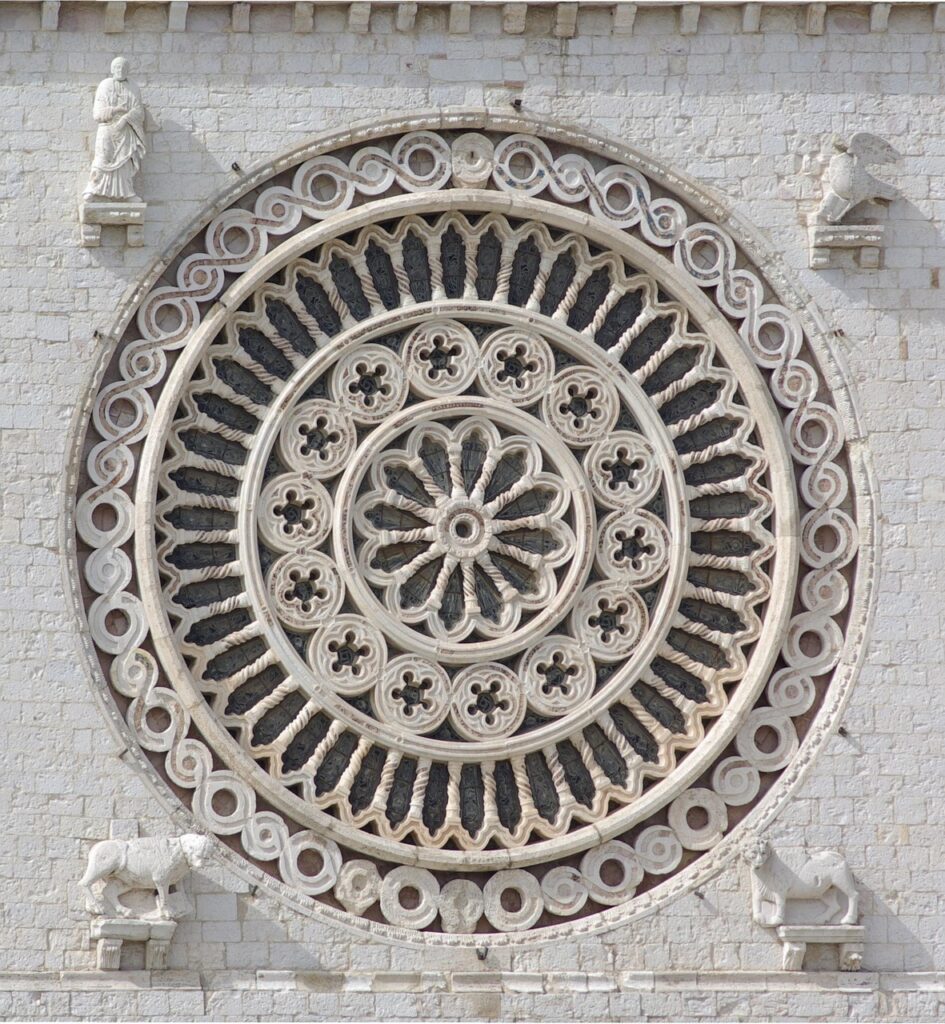
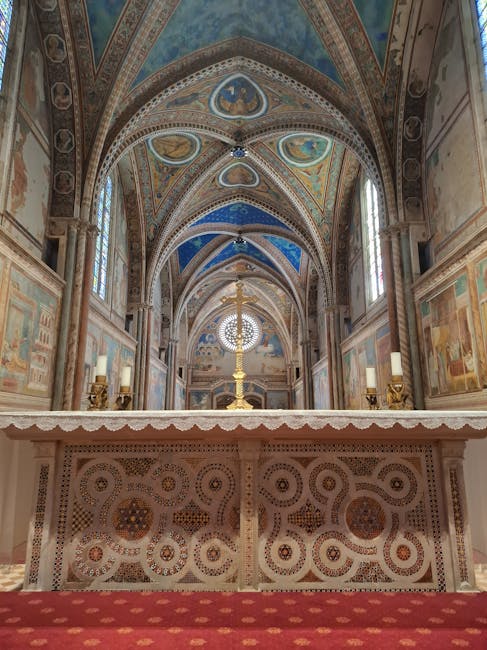
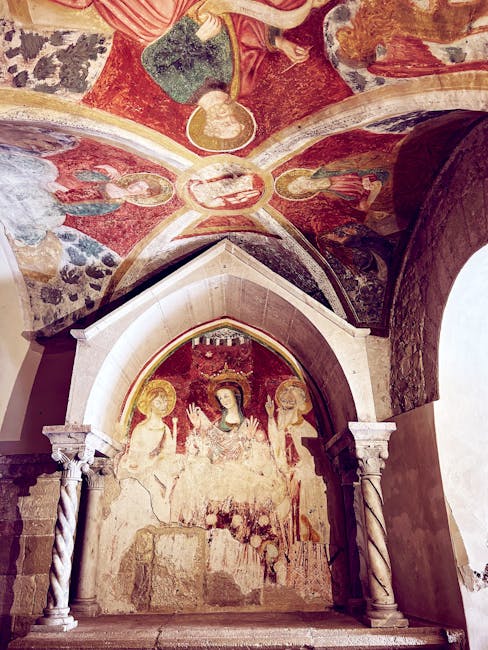
Why visit? The Upper Basilica houses a cycle of frescoes attributed to Giotto and his school (scenes from the life of Christ and of Saint Francis) and, in the Lower Basilica, a set of paintings by Cimabue, Simone Martini, Pietro Lorenzetti and other proto-Renaissance masters that depict the life of the Poverello of Assisi in striking images. Contemplating these frescoes takes time: the scenes unfold like a visual narrative intended for medieval worshippers, where every gesture, garment and liturgical action carries theological meaning.
Practical tips:
- Prefer the first hour after opening (08:00–09:30) or late afternoon to avoid coach groups. Morning light often brings out the best colors.
- Respect silence; photography without flash is allowed in some areas, but flash is strictly prohibited.
- Take an audio guide (often available at the reception for ~€3–€4) or book an official guided tour to understand attributions and recent restorations.
- Visit the Museo e Tesoro della Basilica (near the main entrance) to see relics, manuscripts and liturgical objects that complement the basilica’s story.
Basilica di Santa Chiara, San Damiano and the Porziuncola: Franciscan simplicity and sacred arts
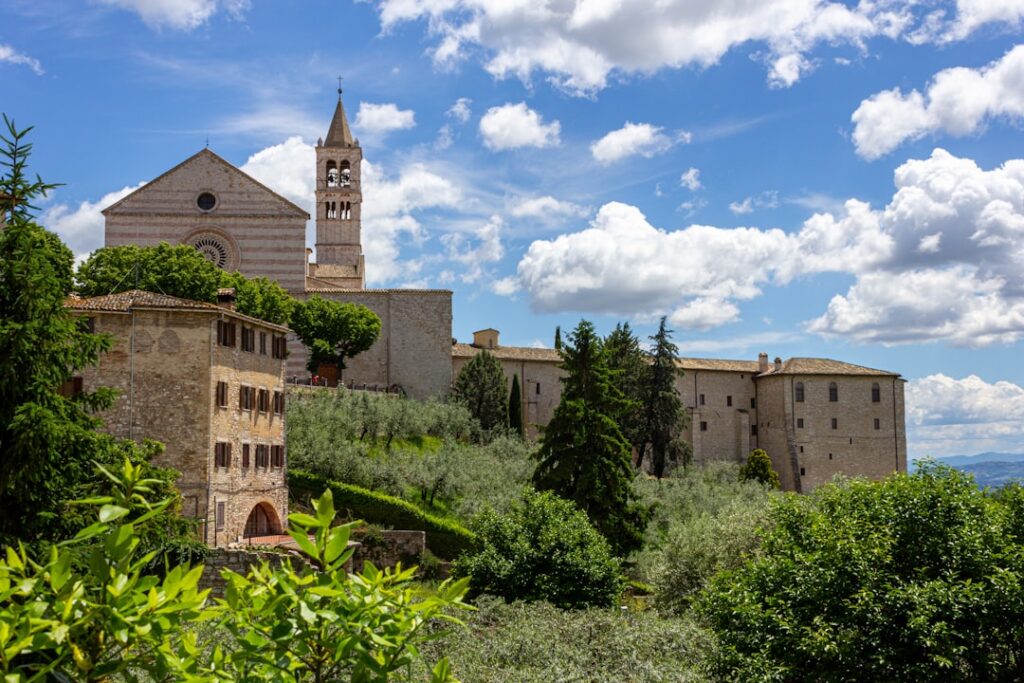
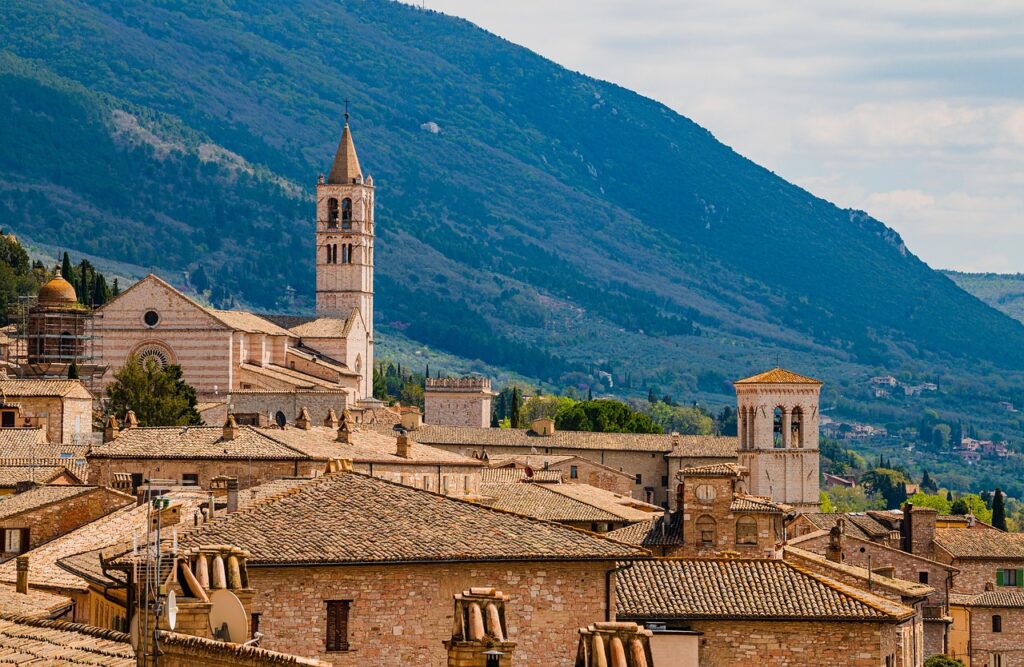
A few minutes’ walk from Piazza del Comune, the Basilica di Santa Chiara is dedicated to Saint Clare of Assisi. Address: Piazza Santa Chiara, 06081 Assisi PG, Italy. It houses Saint Clare’s body and preserves a medieval crucifix famed in tradition for speaking to Saint Francis. The church’s interior is sober, lit by the warm colors of modern stained glass and a few fragmentary frescoes.
Hours and fees:
- Hours: 09:00 – 18:00 (seasonal variations), daily mass according to the liturgical calendar.
- Church entry: free; access to the crypt and the Canonica museum (Museo della Canonica): €4 (full price), reduced €2.
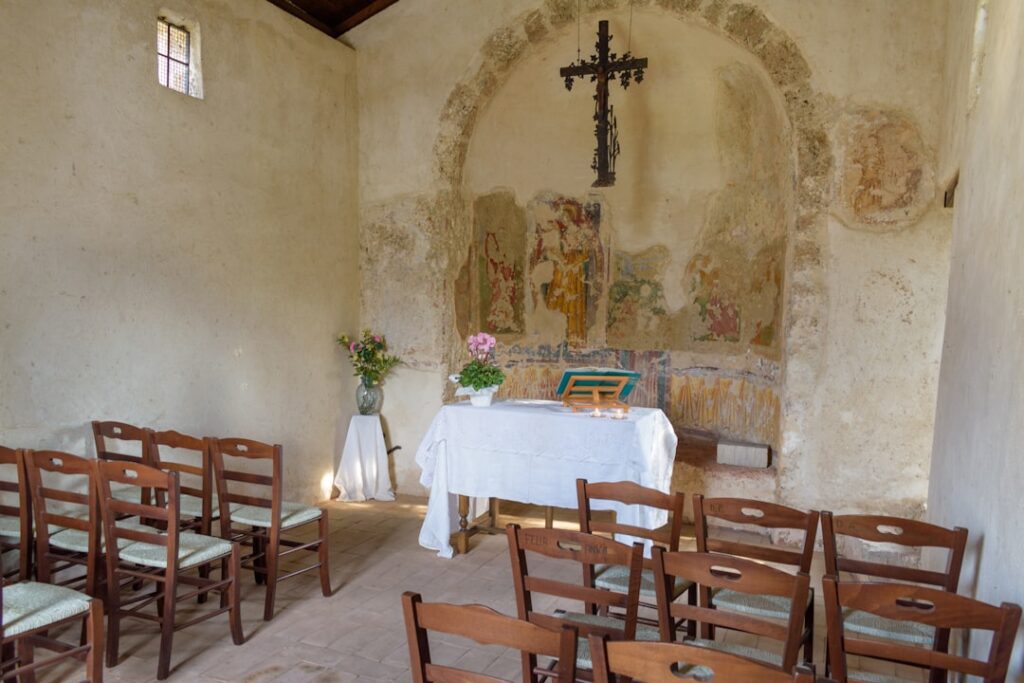
San Damiano, located outside the historic center (Address: Via San Damiano, 06081 Assisi PG, Italy), is the small monastery where Saint Francis received the call to « rebuild the Church. » You’ll find the famous San Damiano crucifix (a reproduction; the original is kept in the Basilica di Santa Chiara) and modest but deeply intense frescoes. San Damiano often operates on a donation basis (suggested contribution: €3–€5).
The Basilica di Santa Maria degli Angeli (Address: Piazza Porziuncola, 06081 Assisi PG, Italy), larger and more modern, houses the tiny chapel known as the Porziuncola, the historical heart of the Franciscan order. Hours: generally 06:30 – 19:30; entry to the basilica is free; a visit to the Porziuncola and the Museo della Porziuncola may be included in tours or request a symbolic donation around €3.
Tips for these sites:
- Combine a morning visit to Santa Chiara with San Damiano in the afternoon for a spiritual progression: the solemnity of the church followed by the simplicity of the monastery.
- Wear respectful attire in sanctuaries (shoulders and knees covered); some sites provide shawls at the entrance.
- If you’re a pilgrim, bring a prayer notebook: offices and moments of silence are often offered by the religious community.
Hermitages, chapels and museums: devotional paths, secondary frescoes and off-the-beaten-track places
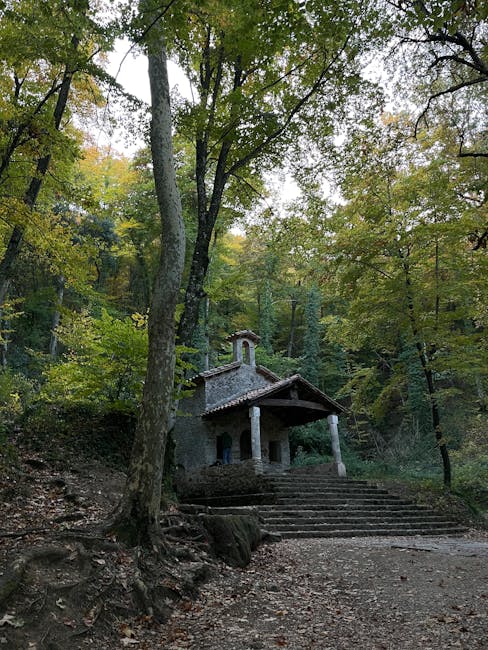
Assisi is more than its great basilicas: the surrounding hills shelter hermitages, oratories and chapels where sacred art appears in a more intimate form. One of the most moving places is the Eremo delle Carceri (Address: Loc. Eremo delle Carceri, 06081 Assisi PG, Italy), about 3 km northeast of Assisi. It was an ancient place of solitude for Saint Francis and his brothers, set in a wooded gorge where silence and prayer prevail.
Hours and practical information:
- Hours: generally 09:00 – 17:00 (closed certain days depending on religious services and season); access by local shuttle or on foot from Assisi (about 45–60 minutes walk).
- Entrance: voluntary donation recommended (€2–€5), sometimes a volunteer guide is present at the site.
The path to the hermitage is lined with small chapels and oratories housing fresco fragments, ex-votos and stone crosses. These spaces are perfect for understanding the link between solitude, contemplation and art: the paintings here are more modest but often preserved with their original patina.
Other places worth attention:
- Basilica di San Pietro (Piazza San Pietro, 06081 Assisi PG): less crowded, with a fine collection of later paintings and a peaceful crypt.
- Museo del Tesoro della Basilica di San Francesco (Piazza San Francesco, entrance near main basilica): goldsmith objects, reliquaries and miniatures (entry often included in the combined ticket).
- Parish chapels and oratories scattered through town: look for signposts and ask locals for special visits; many welcome visitors outside liturgical hours.
Itineraries, local tips, optimal times and spiritual immersion
To fully enjoy Assisi’s sacred art, careful planning helps. Here are several itineraries and tips for different paces of visit:
Half-day itinerary (morning) — Intensive and focused on the essentials
- 08:00 – 09:30: Basilica di San Francesco (aim for opening time to see Giotto’s frescoes without crowds) — Address: Piazza San Francesco, 06081 Assisi PG — Combined ticket: €10.
- 09:45 – 10:30: Coffee and a pastry at Piazza del Comune, then a short climb up to Santa Chiara — quick visit (free entry, museum €4).
- 10:45: Walk to the Porziuncola or catch a bus back to visit the Basilica di Santa Maria degli Angeli (free) — enjoy the contrast between the tiny chapel and the large basilica.
Full-day itinerary — Culture, silence and nature
- Morning: Basilica di San Francesco + Museo e Tesoro.
- Midday: Lunch in a local osteria (average meal price: €15–€25), try porchetta or Umbrian ribollita.
- Afternoon: Santa Chiara, San Damiano, then hike to Eremo delle Carceri (allow 2–3 hours for walking and prayer).
Local must-know tips:
- Luggage and accessibility: many streets are cobbled and steep; wear comfortable shoes. Car access to the center is limited by ZTL (restricted traffic zones): use outer parking lots and walk in.
- Transport: from Assisi train station (Piazza Matteotti, 06081 Assisi PG) local buses (APM) serve the historic center; taxis and shuttle services are also available.
- Respect: cover your shoulders and knees in sacred places; avoid loud phone ringtones and loud conversations in churches.
- Photography: no flash; sometimes photography is restricted in certain chapels — check at reception.
Conservation, restorations and reading frescoes: understand to see better
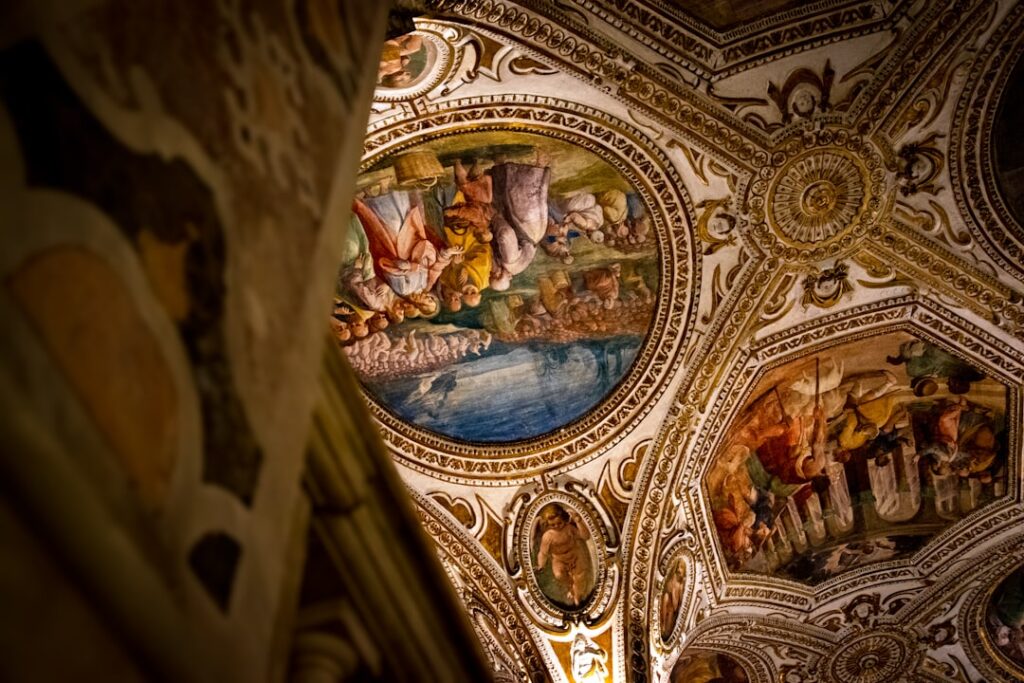
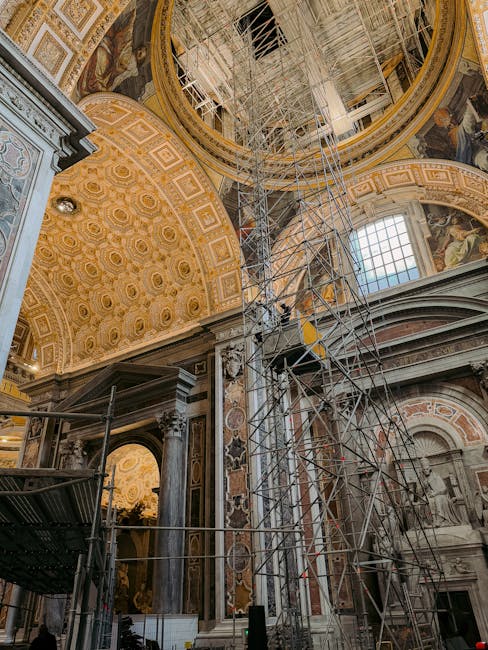
Reading a fresco requires both historical awareness and attention to visual signs — colors, gestures, architectural frames drawn by the painter. Many of Assisi’s frescoes underwent major restorations in the 20th century, sometimes controversial. Conservators have worked to stabilize pigments, remove overpaint and restore iconographic legibility. Knowing about these interventions helps distinguish what is medieval original and what belongs to modern restoration.
Observation tips:
- First take in the overall composition: who sits at the center? Which scene is being told (birth, ministry, miracle, death)?
- Look at costumes and objects: they are often symbolic (books, crosses, blessing gestures).
- Take your time: let your eyes « read » the narrative frieze from top to bottom or left to right depending on the cycle’s layout.
- Use an art guidebook or an audioguide app: historical explanations bring each detail to life.
Conclusion: Experiencing Assisi’s sacred art — between contemplation and knowledge
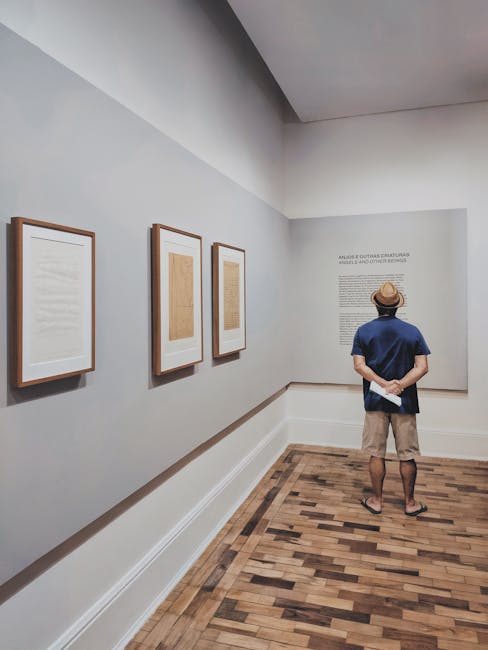
Assisi is a stage for faith where sacred art functions as memory and pedagogy. The frescoes — from the grand narrative cycles in the Basilica di San Francesco to the modest paintings in hermitages — form a visual library meant to instruct the heart as much as the mind. Visiting Assisi is an invitation to slow down: linger over a saint’s figure, an expression, a miracle scene, and sense the eight-century distance between painter and visitor.
Practically speaking, plan visits to take advantage of morning openings, buy the combined basilica ticket if you want a comprehensive approach, and allow time in your itinerary for silent pauses (San Damiano, Eremo delle Carceri). Respect local rules — dress code, silence, no flash — and ask at reception about guided tours or temporary exhibitions. For accommodation, favor central options (Via San Francesco, Via del Risaro) or countryside agriturismi if you seek peace and panorama. On the food side, indulge in Umbrian cuisine: goat cheeses, Castelluccio lentils (as soup or salad depending on the season), and local olive oil.
Finally, whether you come on pilgrimage or for art history, bring a notebook, moments of silence and good walking shoes. Assisi asks for attention that goes beyond a simple checklist of sites: it requires openness to emotion and memory. The frescoes, witnesses of an art in the service of faith, will stay with you long after you leave and will be a reason to return — at different hours of the day, under different lights — to deepen your reading of these painted surfaces, so simple in appearance and so profound in their message.