





Introduction
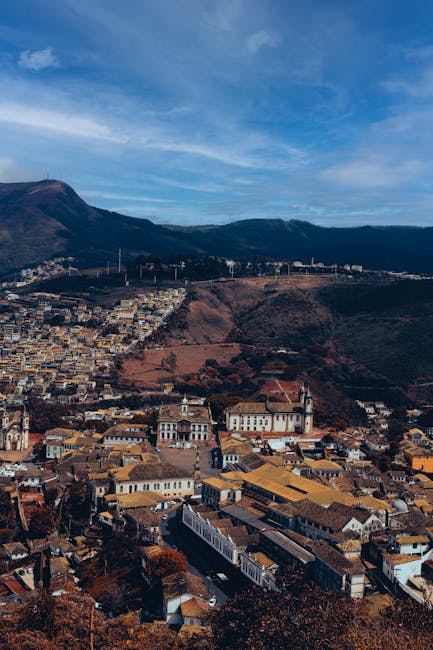
Perched atop green, rolling hills, Umbria’s hilltop villages offer a sensory feast: sun-warmed ancient stone, narrow lanes slipping between medieval facades, vistas that look hand-painted, and a rural calm that soothes even the most hurried traveler. As Italy’s verdant heart, Umbria is less trodden than neighboring Tuscany, but it hides architectural, religious and landscape treasures worth the detour. Every perched village here tells a story — of a fortress that became a town, a piazza that hosted markets and celebrations, a basilica whose frescoes have endured the centuries.
In this guide I’ll take you “to the top of the hills” to discover breathtaking hilltop villages in Umbria: routes for wandering, must-see monuments, exact addresses for eating and sleeping, and practical tips to make the most of places often only reachable on foot or via winding roads. You’ll find concrete details: exact addresses, prices in euros, opening hours and suggestions for seasonal activities. Whether you’re seeking a nature reset, the perfect sunrise photo, or a plate of truffle pappardelle with an endless view, Umbria will deliver.
Through immersive descriptions, I’ll focus on three emblematic villages — Assisi, Spello and Gubbio — providing for each the main sights, practical tips (where to park, which walking routes to favor), and the best times to avoid crowds or catch exceptional light. You’ll also get advice on typical accommodation (agriturismi, charming relais), authentic restaurants with price ranges, plus tips for hiking between villages and organizing a family or solo visit.
Umbria is best lived slowly: take time to wander, pause at a panoramic window, step into a church to listen to the silence, and sip a local wine while the valley stretches out below. These hilltop villages invite contemplation but also active discovery — artisan workshops, weekly markets, patron saint festivals and paths that link stone after stone. Ready to climb? Let’s start the ascent.
Why Umbria is the perfect setting for hilltop villages
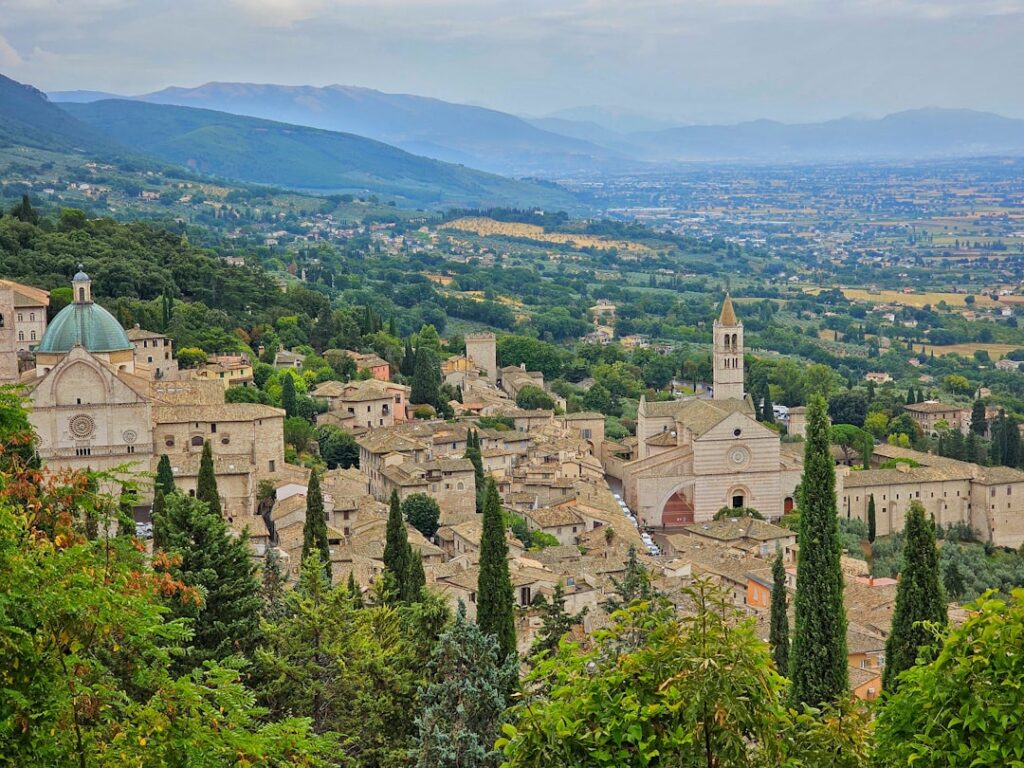
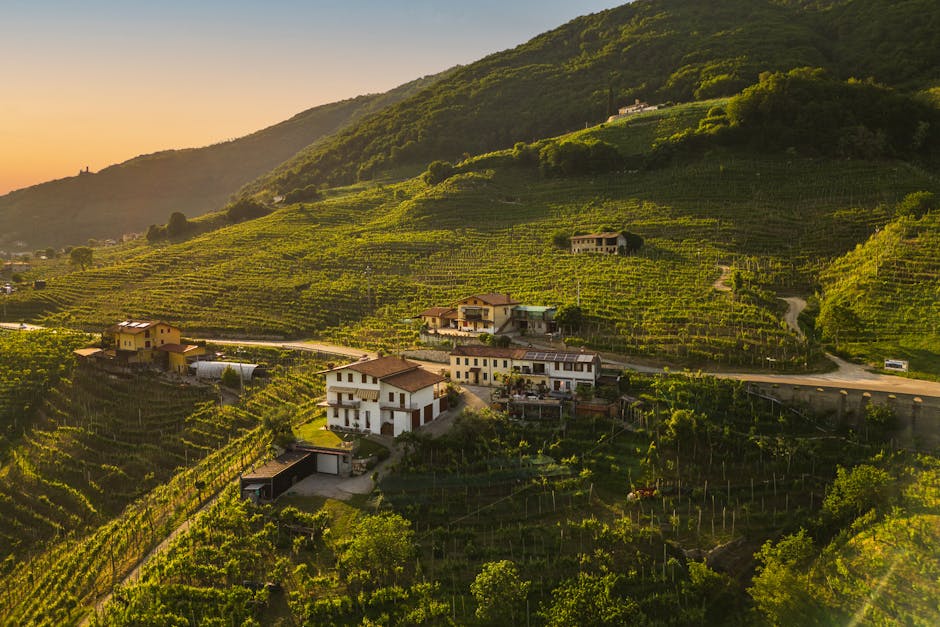
Located in the heart of the Italian peninsula, Umbria’s landscape of hills and small mountains encouraged the development of hilltop villages from medieval times. Often fortified, these towns occupy strategic promontories with sweeping views over valleys, olive groves and vineyards. That defensive positioning now offers visitors spectacular panoramas at sunrise and sunset. But the appeal goes beyond the scenery: these places are hubs of culture, faith and art. Basilica frescoes, town halls and small churches hold masterpieces of sacred and secular art, often less crowded than works in larger cities.
The pervasive use of stone — from travertine to local limestones — gives these villages a cohesive aesthetic: red-tiled roofs, cobbled lanes and ivy-clad facades. Visiting, you’ll notice the balance between heritage preservation and everyday life: craft shops, cafés where locals play cards, restaurant terraces serving regional dishes like torta al testo or pici. Umbria is also steeped in religious tradition: pilgrimages, processions and sanctuaries mark the calendar.
Practically speaking, Umbria is linked by scenic roads (SS3 Flaminia, SP316, SP458) that make reaching these hilltop villages straightforward. Distances are reasonable: Perugia to Assisi is about 25 km, and Spello to Montefalco is roughly a 30-minute drive. Public transport exists but can be sparse in the evenings, so renting a car often offers the most flexibility for visiting multiple villages in a day. Hikers will appreciate the many ridge trails and old rural paths (vie di campagna) that connect villages on foot, letting you enjoy nature and arrive at towns via dramatic approaches.
Three unmissable hilltop villages in Umbria
Assisi — Basilica of Saint Francis and the sacred panorama
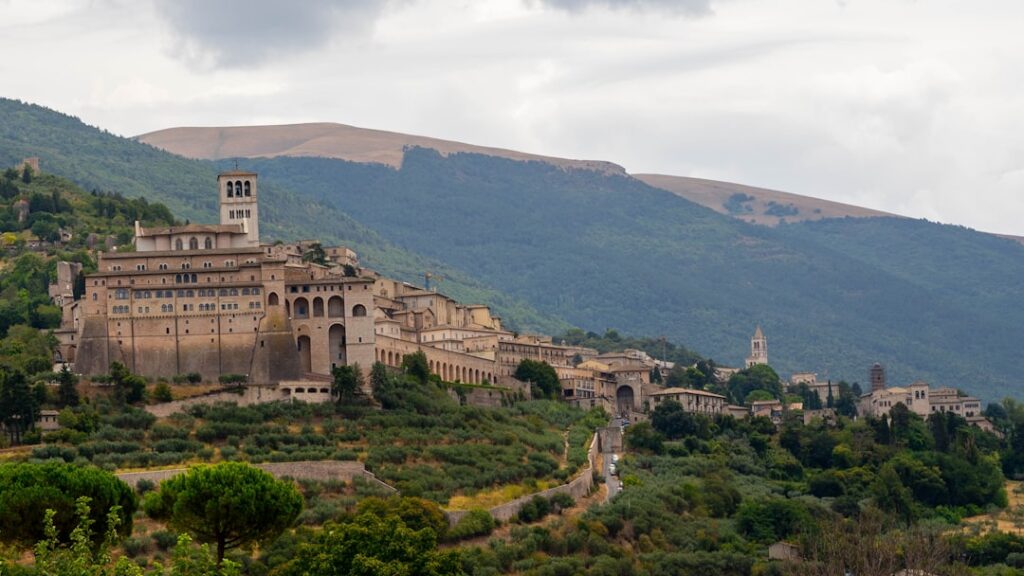
Assisi, a UNESCO World Heritage site, is the perfect example of a hilltop town where faith and medieval history come together. The must-see monument is the Basilica di San Francesco d’Assisi, located at Piazza San Francesco, 1, 06081 Assisi PG, Italy. Opening hours: generally 07:00–12:00 and 15:00–19:00 (closures possible for services; check before you go). Access to the lower basilica is free, but entry to certain chapels, the crypt or the Museo Sacro may require a ticket — expect about €3–6 depending on updates. Inside, frescoes by Giotto and Cimabue, when viewable after restoration, are deeply moving.
Stroll the streets around the Piazza del Comune and visit the Basilica di Santa Chiara (Piazza Santa Chiara, 06081 Assisi PG; usual hours 08:00–19:00; church entry free, small fee for the museum). For sweeping views, climb up to the Rocca Maggiore (Via della Rocca, 06081 Assisi PG): access varies but is often around €5, typically open 09:00–18:00 in season. From its ramparts, the vista over the Tiber valley is stunning at sunset.
Practical tips: park at the Parcheggio di Porta Nuova (Via Campiglione, 06081 Assisi PG) or the public lot near Assisi train station (Piazza Dante Alighieri); daily rates vary, usually €3–8 per day. Streets are steep — wear comfortable shoes and stay hydrated — there are several public drinking fountains with potable water. Visit early in the morning to avoid tour groups and enjoy soft, photogenic light.
Spello — flowered lanes and ancient mosaics
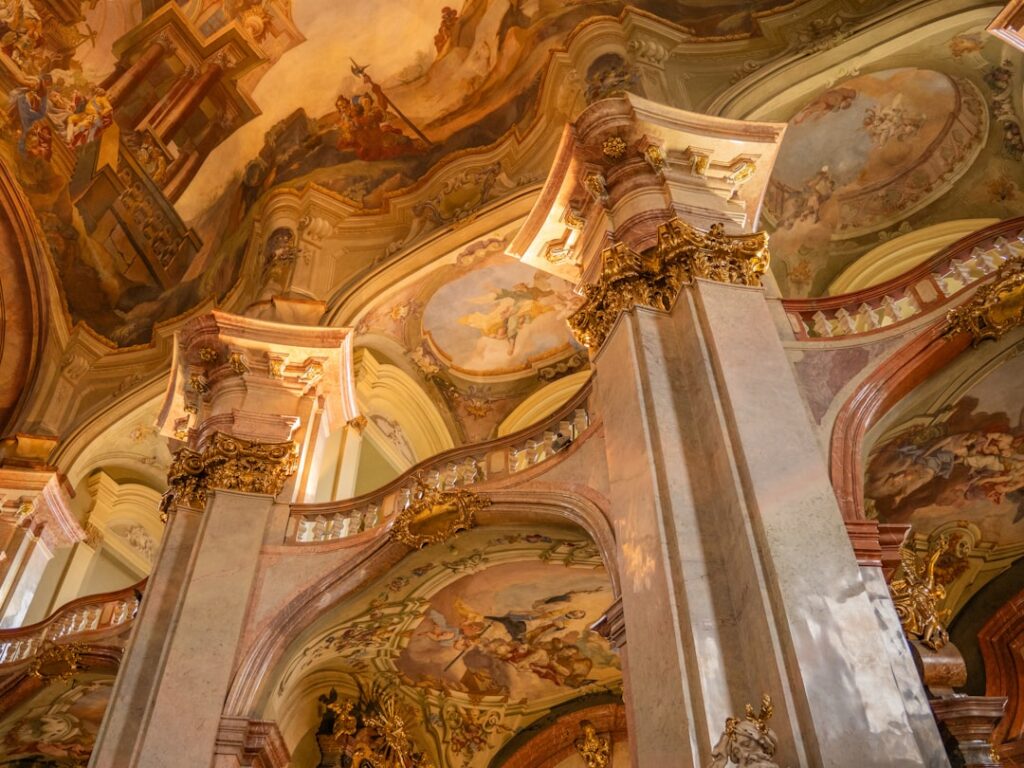
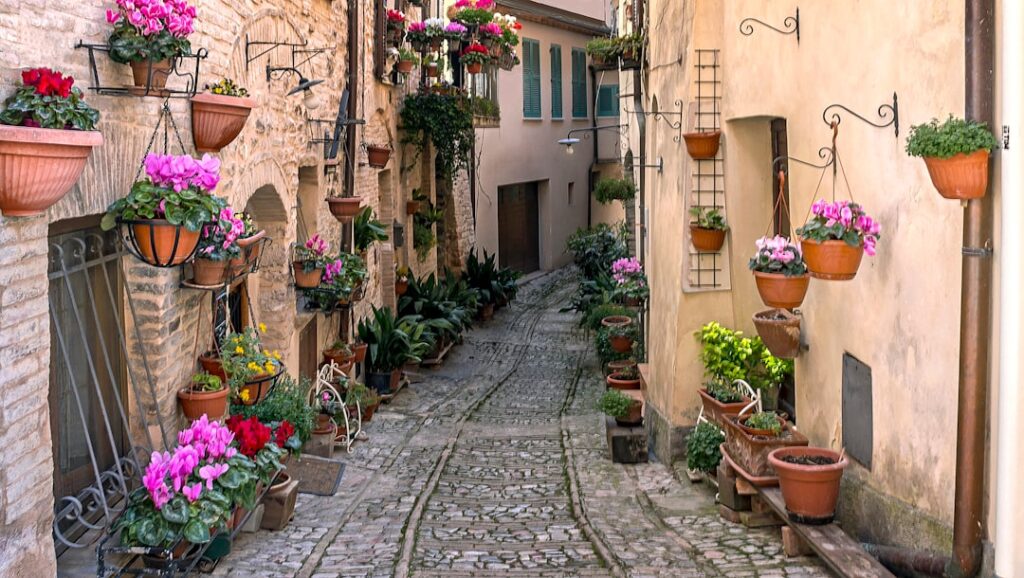
Spello is a small hilltop gem, famous for its flower-decked streets in spring (Infiorata di Spello in June). The main entrance to the old town is through the Porta Consolare (Via Consolare), which opens onto medieval vistas. Don’t miss the Chiesa di Santa Maria Maggiore (Piazza della Repubblica, 06038 Spello PG, Italy), home to frescoes and an ornately decorated chapel; usual opening hours 09:00–13:00 and 15:00–19:00; free entry, donations welcome.
Also visit the Villa dei Mosaici (Via Collicello, 06038 Spello PG), an archaeological site with Roman floor mosaics — seasonal hours around 10:00–17:00, approximate fee €3–5. Wandering Spello’s lanes reveals inner courtyards, artisan workshops and viewpoints overlooking the Umbrian countryside. Take time to admire old wooden doors, pottery and shops where craftsmen work leather and ceramics.
Practical tips: recommended parking is Parcheggio Via Olivata (Via Olivata, 06038 Spello PG), about €5 per day. The lanes can be narrow — walk where possible and avoid large luggage. For local cuisine, I recommend the Trattoria del Corso (Piazza della Repubblica, number varies by season) — mains typically €10–18. In summer bring a hat: the stone soaks up the heat.
Gubbio — medieval history and the Piazza Grande
Overlooking the valley of the fossato, Gubbio is a hilltop town with authentic charm, known for its Piazza Grande and the Palazzo dei Consoli (Piazza Grande, 2, 06024 Gubbio PG, Italy). The palace now hosts the Museo Civico; usual hours 09:00–19:00 in high season, entrance around €6. From the Piazza Grande, the view over rooftops and mountains is dramatic — especially at sunrise when the town is wrapped in light mist.
Other highlights include the Basilica di Sant’Ubaldo (Piazza Vittorio Emanuele II, 06024 Gubbio PG), reachable by cable car or a hike from the center, usually open 08:00–18:00, free entry though donations are appreciated. The town also features terraced streets, ancient stairways and workshops for wood and leather crafts. The Saturday local market (via del forno and surrounding streets) is a great place to taste farm products: cheeses, cured meats and honey.
Practical tips: park at the Parcheggio Piazza Quaranta Martiri (Via XX Settembre) and then walk up to the Piazza Grande. Bring walking shoes for steep staircases. For a traditional meal try Osteria del Gatti (address varies in the historic center): menus typically around €15–25 per person for regional dishes. If you visit in winter, bring a warm coat — the altitude can bring a chilly breeze.
Where to stay, where to eat and handy local tips
Choosing where to stay in Umbria depends on your priorities: proximity to hilltop villages, rural immersion or hotel comfort. Here are some practical options with addresses, indicative prices and notes:
- Agriturismo Il Castagnolino — Via della Torre, 12, 06036 Montefalco PG. Double room: around €70–110 per night, breakfast included. Setting: restored farmhouse surrounded by vineyards and olive trees, ideal for tasting Sagrantino wines on site. Book ahead in high season.
- Relais San Clemente — Via San Clemente, 5, 06081 Assisi PG. Suites with medieval charm, rates €100–180 depending on season. Very well located for visiting the Basilica di San Francesco on foot.
- Locanda del Teatro — Corso Garibaldi, 25, 06024 Gubbio PG. Boutique hotel in the heart of the village, rooms €80–140. Reserve a table to try local specialties such as coniglio in umido (stewed rabbit).
To eat: favor small family-run trattorie where ingredients come from the local garden. A few recommendations:
- Osteria Piazzetta dell’Erba — Piazza dell’Erba, Spello. Dishes €8–20. Book for the evening. Try the bruschetta with Umbrian extra-virgin olive oil.
- Trattoria del Montone — Via della Rocca, Assisi. Dishes €12–25. Generous portions, specialties cooked over a wood fire.
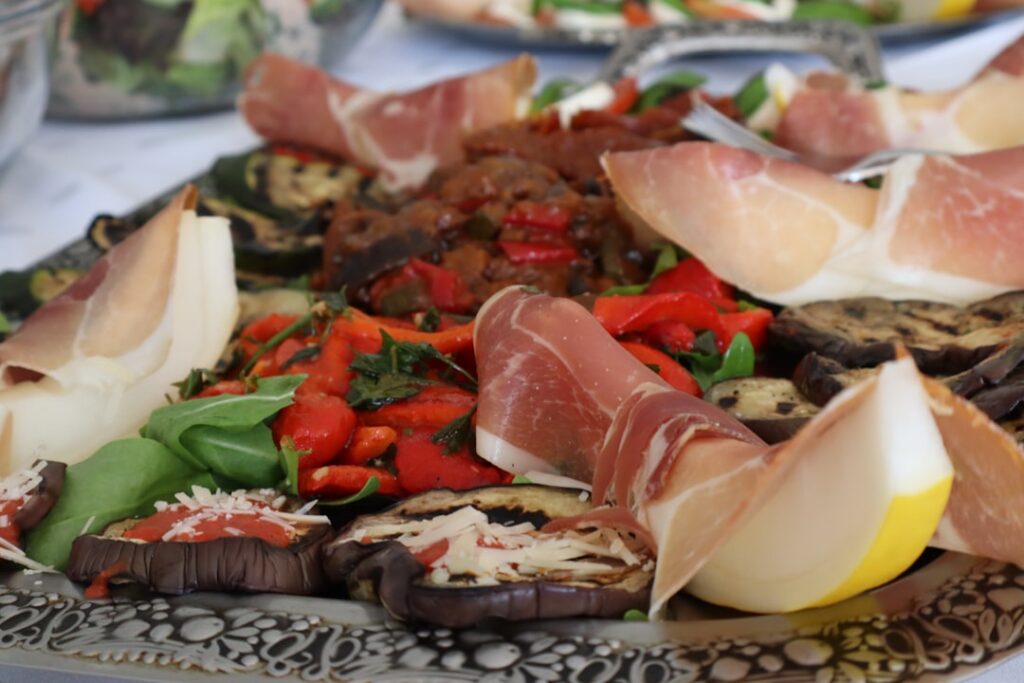
- Enoteca dei Consoli — Via dei Consoli, Gubbio. Charcuterie plates and local wines €10–25.
Practical tips: always ask the price before ordering wine by the glass — some local bottles such as Sagrantino di Montefalco can be pricier. Tourist offices (Ufficio Informazioni) in main towns provide maps and timetables; in Assisi the office is often near the train station (Piazza Dante Alighieri). Payment: most places accept cards, but carry some cash for small craft shops or markets.
Practical tips for visiting hilltop villages
Visiting Umbria’s hilltop villages takes some planning: narrow roads, limited parking and lanes that are often off-limits to vehicles. Here are concrete tips to optimize your visit:
- Transport: rent a compact car to navigate narrow roads easily (rental desks in Perugia and at Assisi station). Driving uphill requires caution and low gearing. Municipal parking lots (Parcheggio) at the entrances to historic centers usually charge a fee: plan for €3–10 depending on duration and town.
- Opening hours: most churches open early (07:00–08:00) and close for siesta (13:00–15:00), then reopen until 18:00–19:00. Check seasonal schedules and religious holidays that may change access.
- Gear: comfortable walking shoes, reusable water bottle, hat and sunscreen in summer. In autumn and winter bring a windproof jacket and good non-slip shoes for wet lanes.
- Photography: best light at sunrise and sunset. Respect places of worship: no flash on frescoes and maintain a discreet demeanor during services.
- Language and hospitality: Italian is the everyday language, but in tourist areas staff often speak English. A smile and a few Italian phrases (buongiorno, grazie) go a long way.
Finally, leave time for improvisation: a random alley, a viewpoint or an artisan you meet by chance can turn a day into a lasting memory. Umbrian hills invite slowness — embrace it and you’ll return enriched by views and genuine encounters.
Conclusion
At the top of Umbria’s hills, hilltop villages reveal themselves as living chapters of a millennial story: medieval towns turned places of wonder where every stone holds centuries of memory and every panorama invites contemplation. Assisi, Spello, Gubbio — and many more — offer a variety of experiences: sacred art, ancient mosaics, views over vineyards and olive groves, family-run trattorie and passionate artisans. The addresses and practical information provided here (exact locations, indicative hours, prices in euros) are meant to help you plan your trip with confidence while staying flexible enough to welcome the delightful unpredictability of travel.
Visiting Umbria means stepping into a slower rhythm, climbing cobbled alleys, pausing before a basilica where silence is punctuated by light through stained glass, and tasting a local wine as the morning mist lifts over the valley. It’s also a lesson in respect for heritage and local communities: favor local producers and family restaurants, leave places as you found them and check opening times before you head out. Umbria’s hilltop villages will give you images — and feelings — you won’t forget: warm stone, crisp evening air, the note of a hymn rising into the night.
If you’re planning a trip, start by choosing one village as your base and radiate outwards: that way you’ll soak up seasonal nuances and fully enjoy local events — patron festivals, markets and cultural happenings. Whether your visit is short or you stay several days, Umbria and its hilltop villages will welcome you with authenticity and warmth. Safe travels, and above all, let the hills surprise you.