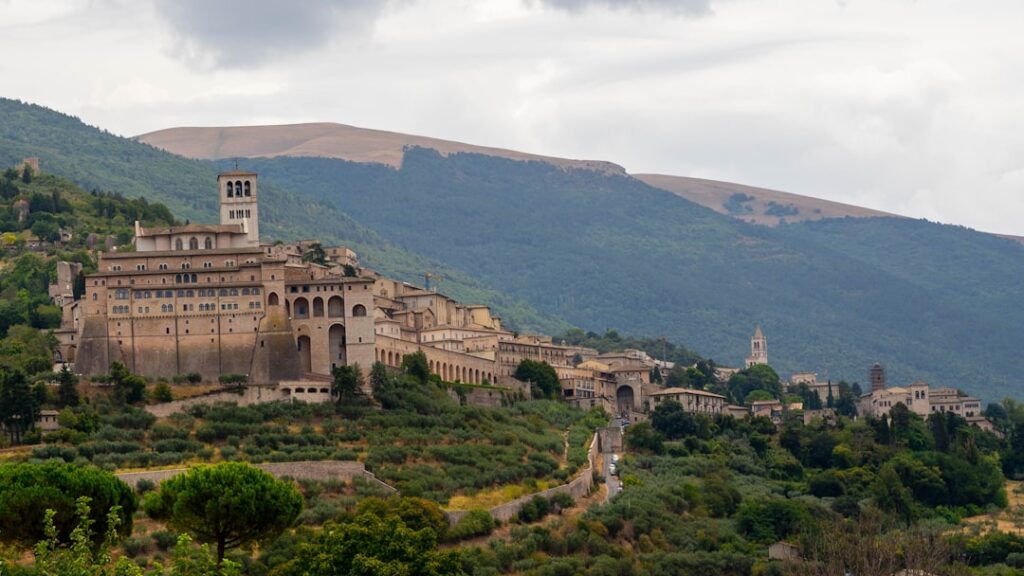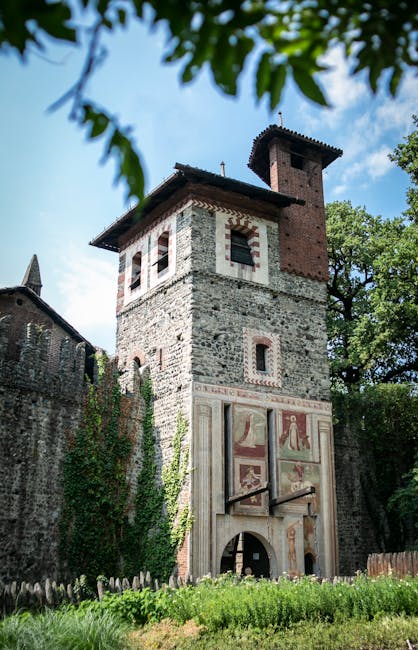






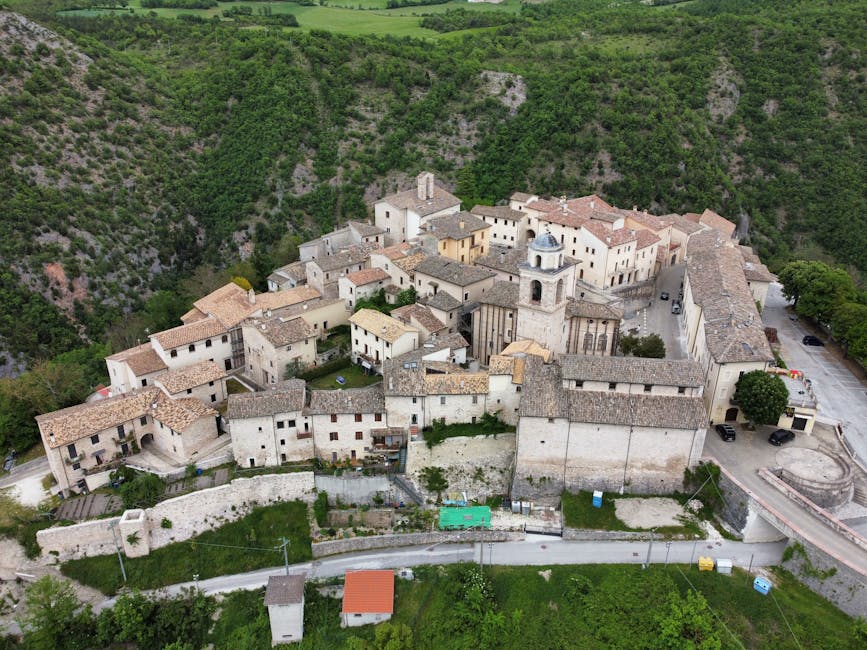
Introduction — Intimate Umbria: Hidden Treasures of Hilltop Borgos
Set between olive-covered hills, river valleys and sacred woods, Umbria is Italy’s heartland — away from the beaches, close to tradition. If Rome draws travelers for its marble and Florence for its masterpieces, Umbria prefers discretion: every back road seems to lead to a borgo perchè, a hilltop village that looks as if time has slowed down, preserving stone, narrow alleys and culinary rituals. This guide will take you into intimate Umbria: small medieval towns, often-overlooked monuments, recommended places to dine, gentle evening strolls, and practical tips to explore like a local. You’ll find immersive descriptions, exact addresses, opening times, approximate prices and tricks to make the most of each stop.
Umbria’s hilltop borgos—whether Bevagna, Montefalco, Spello, Gubbio or Trevi—offer a rich palette of experiences: bell towers piercing the morning mist, artisan workshops, tiny squares where you can spend hours sipping a local wine, and vistas that stretch toward the Apennines. Each place has its own story: sanctuaries carved into rock faces, fortresses that still watch over the roads, and churches adorned with forgotten frescoes. But the atmosphere isn’t just historical: it’s a living mix where markets, local products (Umbria olive oil, Sagrantino di Montefalco wines, cured meats), and patron saint festivals bring the stones to life.
This guide takes a sensory and practical approach. You’ll read detailed descriptions designed to help you imagine the light on a square, the crackle of a vinyl record in an osteria, the scent of pappardelle with black pork ragù, and the freshness of an early-morning walk. Each section lists specific places with full addresses and useful info (hours, prices) so you can plan your stops without hesitation. I’ve also added local tips to optimize your visits: when to come for perfect photos, how to park without stress, and how to book a guided tour of a museum or monument. Intimate Umbria is meant to be discovered slowly; let a relaxed pace guide your trip and keep your eyes open — treasures are often hidden behind a narrow door or at the end of a shaded alley.
Ready to climb the ridgelines of these hilltop borgos and hear their stories? Follow along: in the sections below we’ll explore five emblematic villages or micro-regions with concrete details for each visit. Breathe in the countryside air, carry a map but allow yourself to be surprised: in Umbria, the most beautiful discoveries often happen by happy accident.
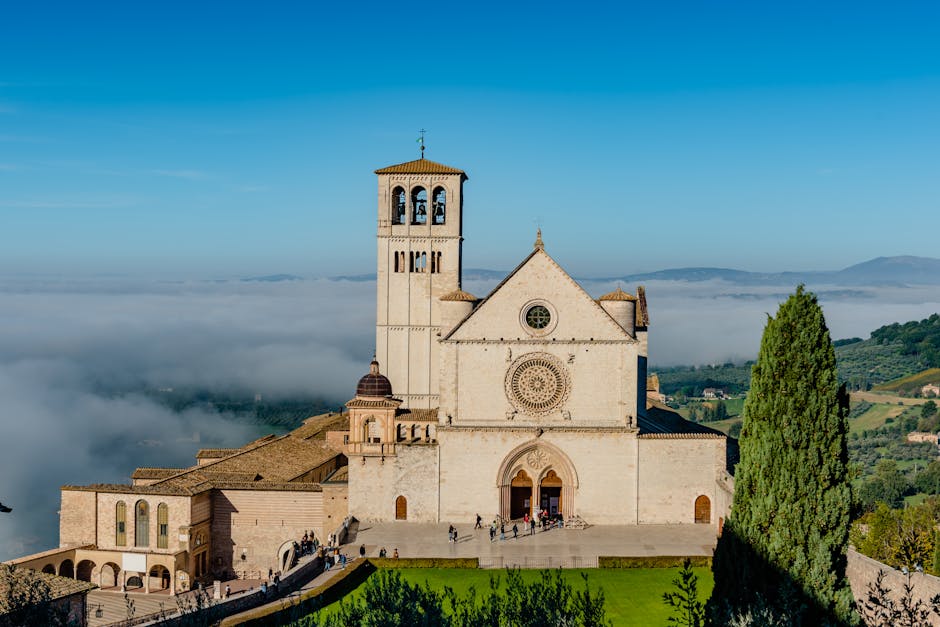
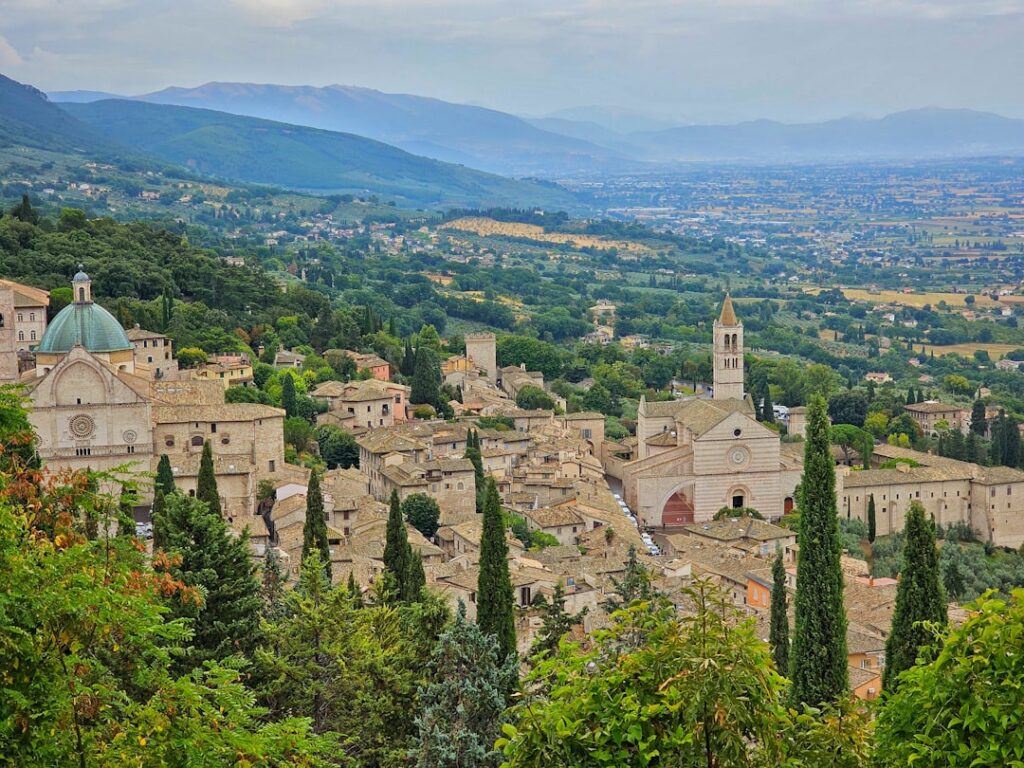
Assisi and the Rocca Maggiore: Spirituality and a Fortified Panorama
Assisi is synonymous with Saint Francis, and for good reason: the Basilica di San Francesco is one of the world’s major spiritual sites. Located on Piazza San Francesco, 06081 Assisi (PG), the basilica is made up of two levels richly decorated with frescoes by Giotto and other masters. Address: Basilica Papale di San Francesco, Piazza San Francesco, 1, 06081 Assisi PG, Italia. Typical opening hours: 7:00–19:00 (seasonal; closures possible for ceremonies). Price: access to the basilicas is usually free, but entry to the attached museums or certain exhibitions can cost between €3 and €6. It’s best to arrive early (before 9:00) to avoid crowds and to enjoy the morning light on the frescoes.
A few streets away, overlooking the town, stands the Rocca Maggiore, a medieval fortress offering one of Umbria’s widest panoramas. Address: Rocca Maggiore, Piazza San Francesco, 06081 Assisi PG. Hours: generally 9:30–18:00 in season (off-season times vary). Price: entrance is around €4 (discounts for students and seniors). The climb to the Rocca is earned — cobbles and steps — but every landing reveals a different perspective over Assisi’s roofs and the plain stretching toward Bastia Umbra and Perugia.
Practical tips: to photograph the basilica without people, aim for the bluish hour before 8:00; for sunset over the Rocca, settle on the terrace or along the eastern ramparts. Parking: the parcheggio di Porta Nuova (Via Beato Matteo, 06081 Assisi) is a good starting point, about a 10–15 minute walk from the basilica. Bring sturdy shoes — the alleys are uneven — and check the liturgical calendar if you want to attend a mass or avoid busy times. Finally, taste the local olive oil at a trattoria on Via San Rufino: simple, incomparable.
Spello and Its Flowered Walls: A Borgo of Little Wonders
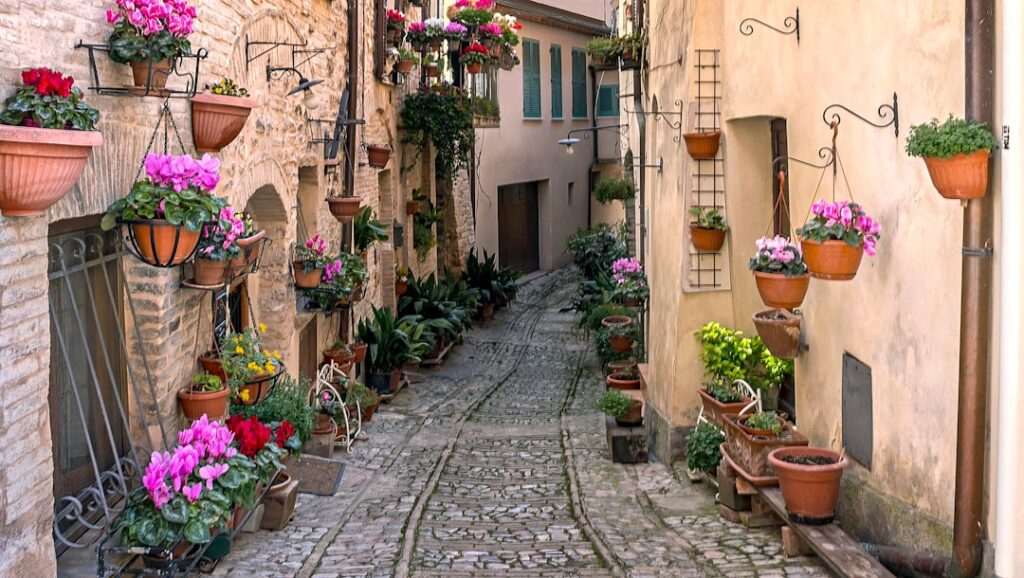
Spello is a tiny jewel, famous for its flower-filled alleys and Roman-era mosaics. The hilltop borgo’s main administrative address is Comune di Spello, Piazza della Repubblica, 1, 06038 Spello PG. Suggested walk: start at the Porta Consolare, the emblematic square on Via Consolare; the Roman arch sets the tone. The charming Palazzo Comunale (Piazza della Repubblica) serves as the local information point. Tourist office hours: 9:00–13:00 and 15:00–18:00 (times vary by season).
Don’t miss: the church of Santa Maria Maggiore (Piazza Santa Maria, 06038 Spello PG), known for the magnificent Baglioni chapel decorated with frescoes by Pinturicchio. Address: Chiesa di Santa Maria Maggiore, Piazza Santa Maria, 06038 Spello PG. Hours: 8:30–12:30 and 15:30–19:00 (may vary). Entry: the church is usually free; some chapels or guided visits may ask for a small donation or a ticket around €2–€4.
Spello also lives to the rhythm of festivals, most notably the Infiorata (streets carpeted with flower petals) held in June; during those days, book accommodation well in advance. For palaces and museums, visit the Pinacoteca Comunale (Via Giulia 14) where admission is around €3–€5. Food & drink: stop by the osteria « La Cantina del Grifone » (Via delle Conce, approximate address: Via delle Conce 10, 06038 Spello) for a plate of Umbrian cheeses and a glass of Sagrantino (main dishes €12–€25, wines €4–€8 per glass).
Practical tips: Spello is compact — it’s best to leave the car at the Porta Consolare parking lot (public parking) and explore on foot. The best photos are taken late in the afternoon, when the sun grazes the walls and petals reveal their colors. If you visit in summer, carry a small water bottle: although public fountains exist, the steep alleys can catch even fit travelers off guard.
Montefalco and Sagrantino Wines: Art, Cloisters and Tastings
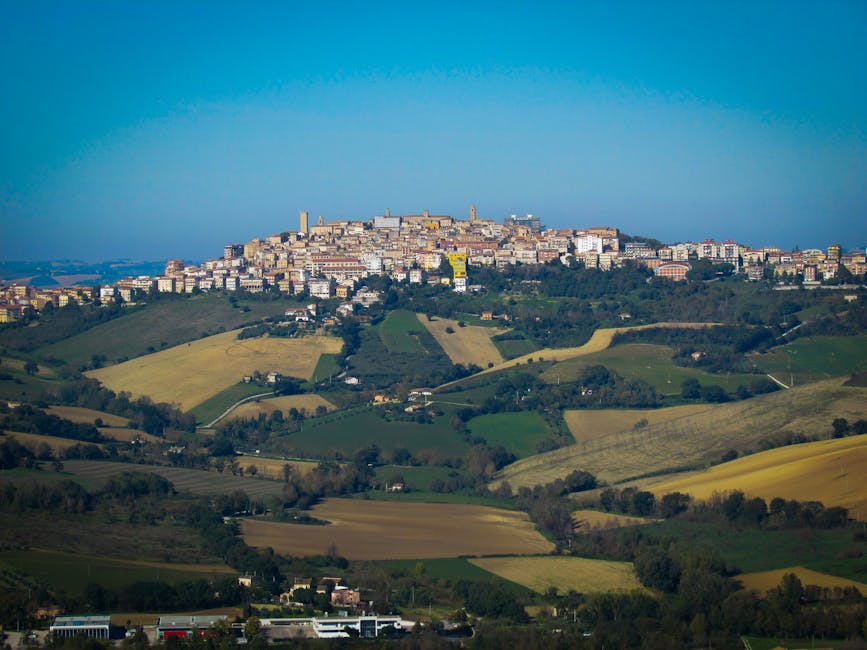
Perched above the valley, Montefalco is nicknamed the « balcony of Umbria » for its stunning views and its famous wines, especially Sagrantino di Montefalco. Administrative address: Comune di Montefalco, Piazza del Comune, 8, 06036 Montefalco PG. The borgo’s heart is easy to explore on foot: Piazza del Comune hosts the Chiesa di San Francesco (home to the Museo Civico, often called Museo di San Francesco). Museum address: Museo di San Francesco, Piazza del Comune, 06036 Montefalco PG. Hours: generally 10:00–13:00 and 15:00–18:00; tickets: museum about €5–€7.
Montefalco is above all a sensory experience for wine lovers. Several wineries and producers offer tastings and tours: for example, Arnaldo Caprai (Via S. Eufemia, 2, 06036 Montefalco PG) is a flagship name for Sagrantino. Tasting visit address: Caprai winery, Via S. Eufemia, 2, 06036 Montefalco PG. Visiting hours: often by reservation, 9:30–18:00; guided tasting + tour prices: €15–€35 depending on the formula. Another option is Antonelli San Marco (private agricultural road, info via the Comune), which also offers cellar tours and tastings.
The local cuisine pairs perfectly with these powerful wines. For lunch or dinner, try Osteria « La Concordia » (Via Roma 2, 06036 Montefalco PG) — traditional dishes €12–€25, with a wine list heavy on Sagrantino. Tip: visit the Rocca di Montefalco viewpoint in the late afternoon for ideal light on the hills and make sure to book winery visits during high season. Parking: public lots near Porta Sant’Agostino and Porta Sant’Antonio, then walk into the historic center.
Gubbio and the Festa dei Ceri: Stone, Traditions and Climbs
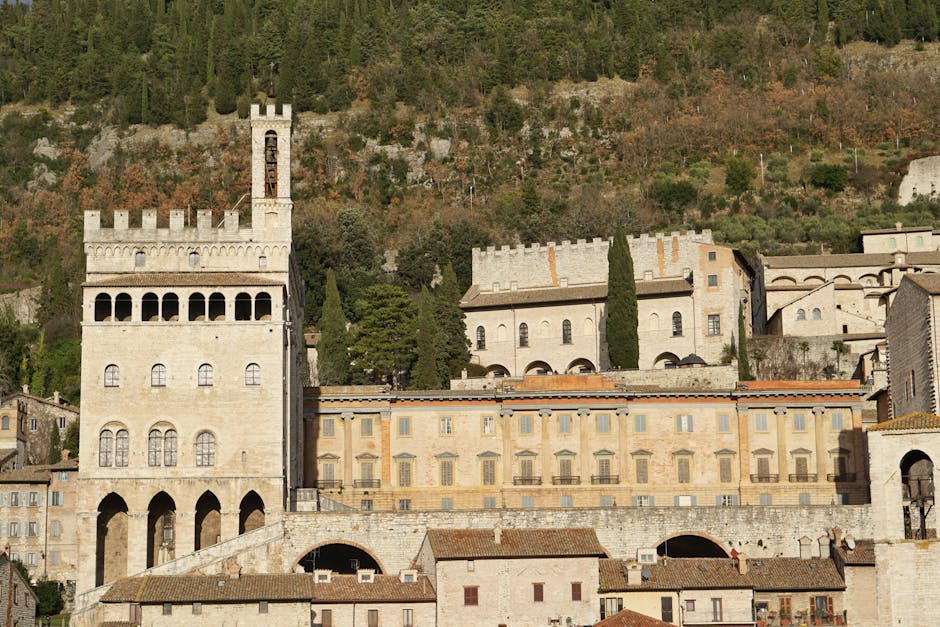
Gubbio is one of Umbria’s best-preserved borgos, famous for its Piazza Grande and the imposing Palazzo dei Consoli that dominates the square. Address: Palazzo dei Consoli, Piazza Grande, 06024 Gubbio PG. The palace houses the Museo Civico; typical hours: 9:00–19:00 (seasonal variations). Entrance fee: around €6–€8 (reduced rates for youth and seniors).
An unmissable experience is the climb to the Palazzo Ducale and a walk toward the funicular that leads to the Sacred Wood (Sacro Bosco). Funicular address: Funicolare Gubbio, Via Frondizi, 06024 Gubbio PG. Hours depend on the tourist calendar; short rides usually cost €2–€4. Gubbio comes alive for the Festa dei Ceri (three huge candles carried in procession on May 15), a spectacular event not to miss if you travel in spring. During this festival, accommodation fills up fast; book several months ahead if you plan to attend.
Curious visitors shouldn’t miss the ancient Roman theatre (Via Teatro Romano, archaeological park), and the Basilica of Sant’Ubaldo, reachable by funicular or by a pleasant hike up Monte Ingino. Address: Basilica di Sant’Ubaldo, Via 2 Giugno, 23, 06024 Gubbio PG. Hours: 9:30–18:00 (variable). Entrance: visiting the sanctuary is usually free; the funicular and some exhibitions require a ticket. Food: try the local porchetta (roasted pork) from one of the small squares — a sandwich costs around €5–€8.
Photo tip: Piazza Grande is magical at dawn, when the palace shadows sculpt the medieval stone. For getting around, prefer parking in the outer lots (Parcheggio Porta Romana, Via Cesare Battisti) and walk up to fully appreciate the steep lanes and artisan workshops. Take time to step into the little churches: often unexpected works of art are tucked away, off the tourist routes.
Practical Tips for Discovering Hilltop Borgos Like a Local
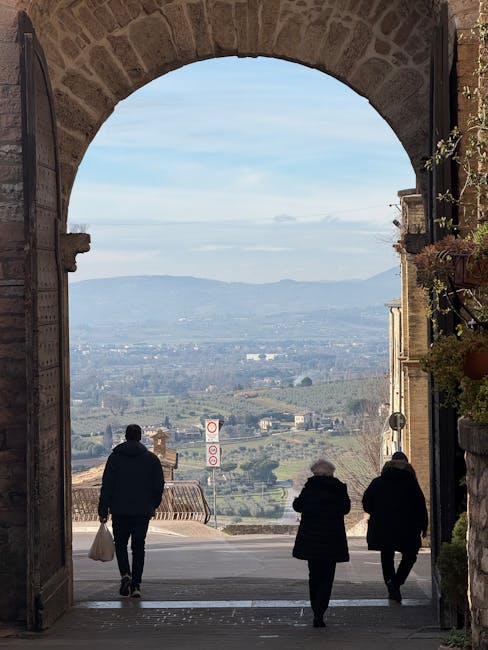
Getting around Umbria requires a bit of strategy: while the region is connected by charming secondary roads, some routes are narrow and winding. Renting a car is often the best option to reach the hilltop borgos; choose a small compact car to maneuver through tight streets and parking spaces. Public car parks are usually found at the gates to historic centers (Porta Nuova in Assisi, Porta Consolare in Spello, Porta Sant’Agostino in Montefalco), after which you explore on foot.
Hours and prices: museums and monuments often open from 9:30/10:00 to 17:00/19:00 depending on the season. Many churches open early and close for the afternoon siesta (13:00–15:00). The prices listed in previous sections should be seen as typical ranges for 2024: €2–€8 for most local museums, €3–€5 for fortresses or small exhibitions, and wine tastings around €15–€35 depending on quality and format. Always check official sites or call the day before to confirm hours and availability.
Common-sense tips: bring comfortable, grippy shoes; a small backpack with water, a guide and a light windbreaker is useful. Learn a few basic Italian phrases for greetings and ordering (hello — buongiorno, please — per favore, thank you — grazie). Book popular winery tours and restaurants in advance, especially in summer and during local festivals.
- When to visit: spring (May–June) and autumn (September–October) offer the best light and temperatures.
- Accommodation: favor agriturismi (farm stays) around the borgos for authenticity and homemade breakfasts.
- Safety: keep valuables secure while wandering the lanes and prefer cards over cash in the street.
Conclusion — Why Intimate Umbria Deserves Your Slow Pace
Intimate Umbria reveals itself in layers: first the stone façade, then the street, and finally the interior — a workshop, a cellar, a chapel. The hilltop borgos don’t give up all their secrets at once; they reward the patient traveler. Assisi lets you feel the region’s spiritual depth, Spello charms with flowers and frescoes, Montefalco seduces the palate with powerful wines, and Gubbio reveals living traditions that make the stone sing. Each village offers concrete places to linger, specific museums and monuments to visit, and views you won’t forget.
Visiting Umbria means accepting a different rhythm — no ticking off monuments but savoring moments: a cappuccino on a square terrace, an aperitivo at sunset on a city wall, a Sagrantino tasting with a producer who tells the story of their land. Practical details (addresses, hours, prices) will help you plan, but leave room for the unexpected: an impromptu invitation to an artisan’s home, a village market, a sung mass in a stone church. Those encounters are what turn a trip into lasting memory.
Lastly, remember that Umbria is lived slowly and with respect: respect sacred places, local products, and residents’ customs. Give yourself time, walk, climb, sit down, and return to a corner — often the treasure is around the next bend, revealed only to those who took the time to look. Buon viaggio in Umbria: may your steps lead you to these hilltop borgos and their intimate treasures.