





Introduction — Bell Towers to Valleys: An Umbria itinerary through suspended hilltop villages
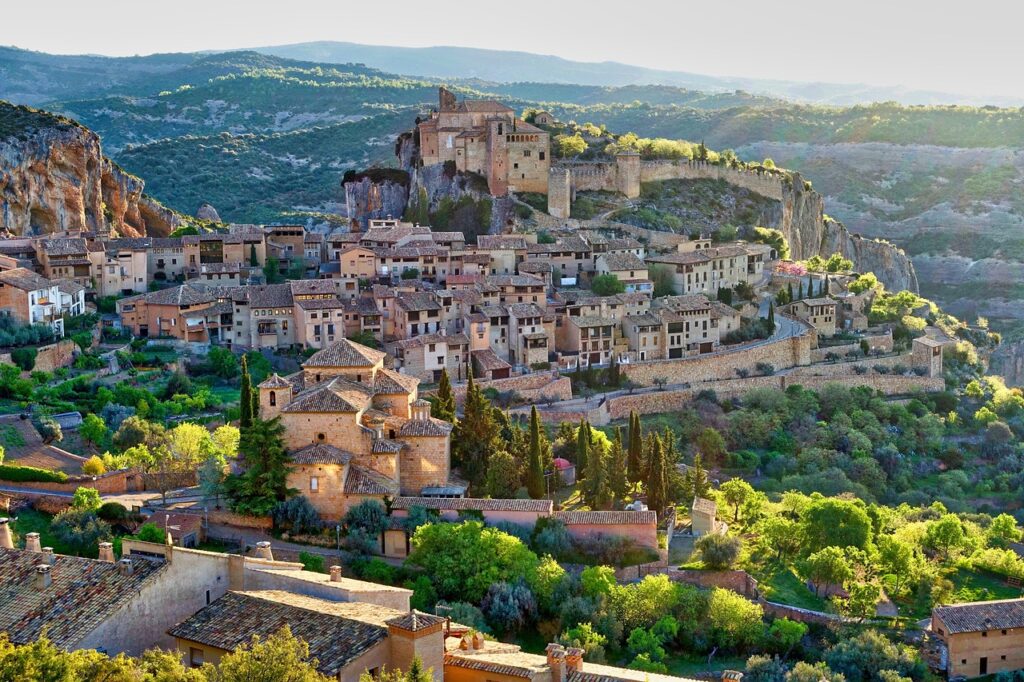
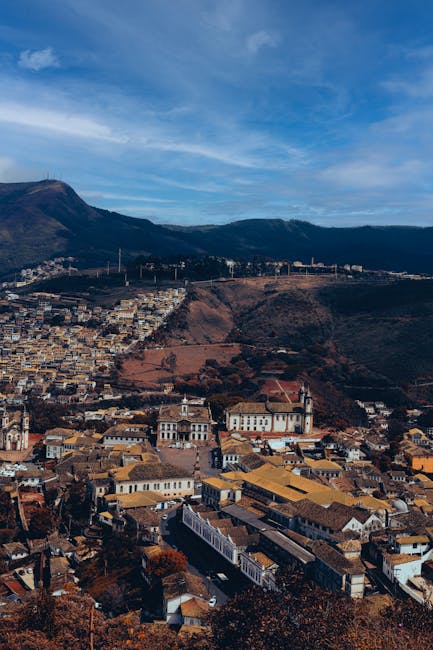
Umbria, Italy’s green heart, is a landscape of rolling hills, deep valleys and perched villages that seem to hang between sky and earth. This guide, aimed at curious travelers and lovers of authenticity, lays out an immersive “bell towers to valleys” route through several of these remarkable hill towns. The goal isn’t to check off attractions but to offer a sensory journey: bells chiming at dawn, cobbled lanes leading to vertigo-inducing viewpoints, squares where time slows, and family-run restaurants where local cuisine tells the story of the land.
In Umbria, each village has its own topography, often built on a rocky promontory overlooking fertile valleys. These “suspended villages” (borghi sospesi) include gems like Assisi, Spello, Orvieto, Gubbio, Todi and Montefalco: places where medieval architecture converses with the countryside. Along this route you’ll find practical details: exact addresses for points of interest, opening hours, admission prices in euros and local tips to help you make the most of your visit. Times and rates are accurate at the time of writing; still, check official websites for seasonal updates.
We’ve structured the itinerary so you can do half-day stops or full-day explorations depending on your pace. You’ll discover cloisters, basilicas, medieval towers and overlooks above olive groves and vineyards. Descriptions are sensory: the feel of stone, the sound of bells, market aromas and the atmosphere of village cafés. Local tips — where to park, when to avoid crowds, which regional dish to try — are included to turn a simple stop into a real immersion.
Finally, to help plan the visual side of your trip, this guide includes suggested image cues you can use in your notebooks or posts. Those visual markers describe photogenic scenes precisely: alleys at sunrise, interior frescoes, stone façades with valley views. Follow this “bell towers to valleys” itinerary to feel the soul of Umbria, a region still largely spared from mass tourism, where every suspended village invites you to slow down, listen and look farther.
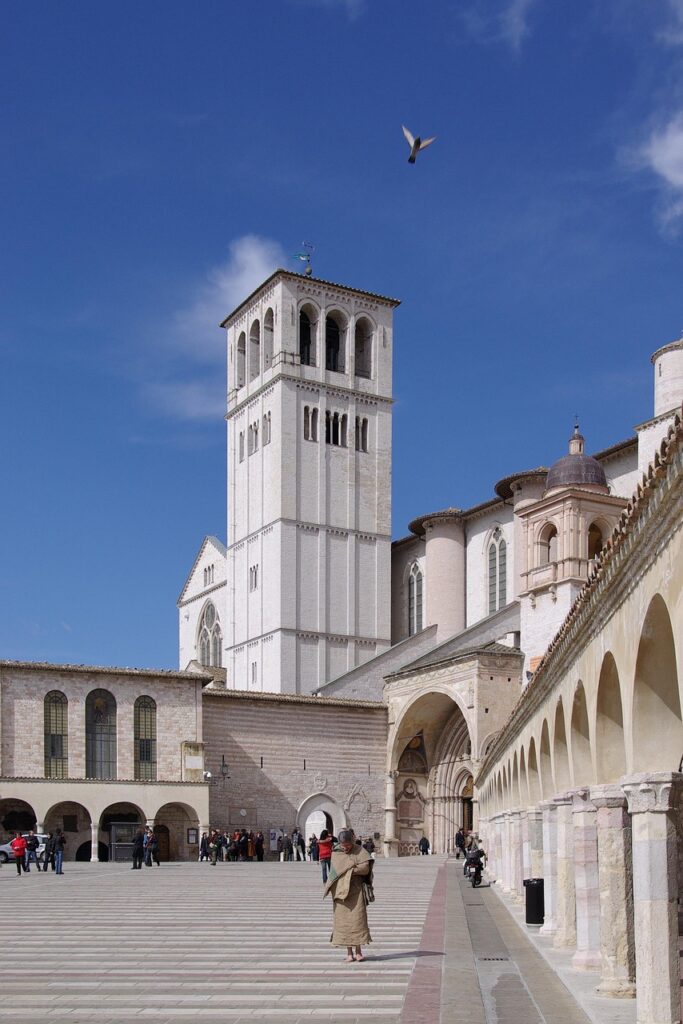
Assisi — The bell tower and the light of the frescoes (Basilica di San Francesco)
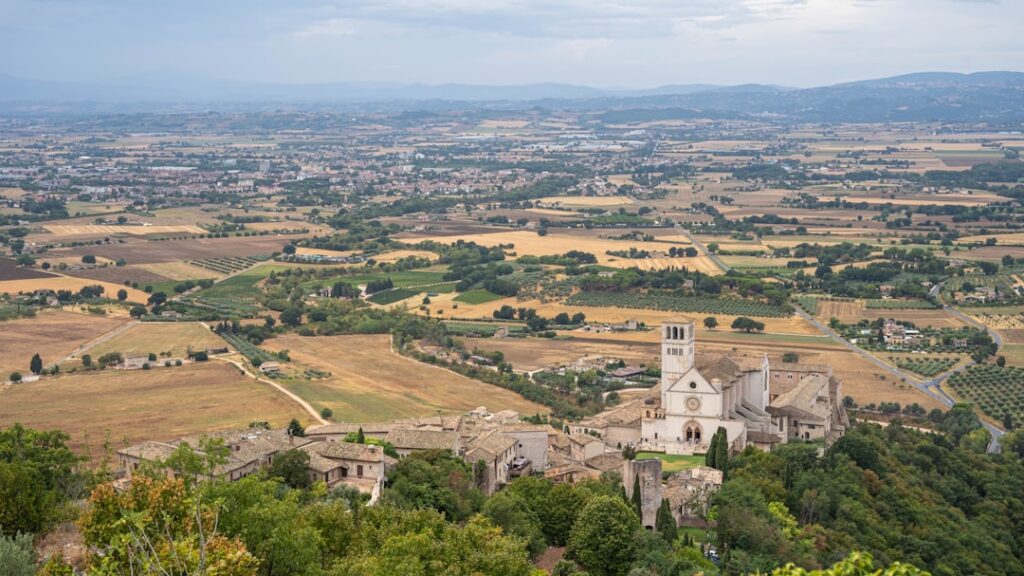
Assisi is often the perfect starting point for an Umbrian route. Dominated by the Basilica of San Francesco, the town perches on the slopes of Mount Subasio and offers panoramas that look like medieval illustrations. Address: Basilica di San Francesco, Piazza San Francesco, 06081 Assisi PG, Italy. Hours: generally open daily from 07:00 to 19:00; the complex includes the Lower and Upper Basilicas. Admission: entry to the basilica is free, but access to museums (Museo della Porziuncola) and certain exhibits may require a ticket of €5.00–€8.00 depending on the season. Check the basilica’s official site for mass times and guided tour schedules.
The basilica, a UNESCO World Heritage site, is famous for frescoes by Giotto and Cimabue: narrative cycles that capture the saint’s life and medieval spirituality. The interior atmosphere is solemn; light filters differently in the lower and upper churches, making each space feel unique. Afterward, wander the narrow streets toward the Rocca Maggiore (Piazza della Rocca, 06081 Assisi PG): the fortress offers panoramic views over the Umbrian valley, perfect for photographing golden landscapes at sunset. Rocca opening times: 09:00–18:00 in low season, extended in summer; suggested admission about €4.00.
Local tips: arrive early in the morning to avoid tour groups and catch the soft light on the pink-hued stones. Café del Vescovado (Via San Francesco 8, 06081 Assisi PG) serves a good espresso and local pastries — expect €3–6 per drink. If you’re after a regional specialty, try torta di Pasqua salata (savory Easter cake) or porchetta roasted in a traditional trattoria.
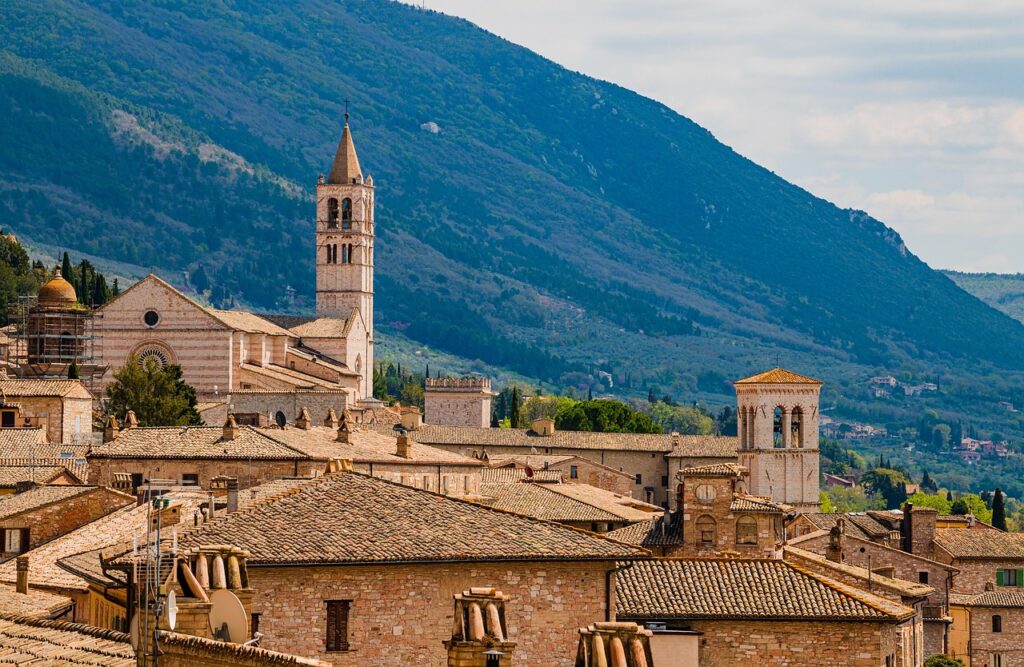
Spello — Flowered lanes and olive-plain panoramas
Perched on the slopes of Mount Subasio, Spello is a small jewel suspended between hills and olive groves. Main address: Comune di Spello, Piazza della Repubblica, 29, 06038 Spello PG, Italy. The historic center is a maze of sloping lanes, medieval arches and houses draped with geraniums and bougainvillea. The recommended route runs along Via Consolare, Via Cavour and reaches Porta Venere, whose viewpoints open onto the Umbrian plain.
Hours and costs: Spello is an open town; monuments like the church of Santa Maria Maggiore (Piazza della Repubblica, 06038 Spello PG) welcome visitors from 09:00–12:00 and 15:00–18:00 (seasonal hours). Entry to the Villa dei Mosaici (when on display) can cost around €3.00–€5.00. Spello hosts the famous Balconi Fioriti (flowered balconies) competition each May–June, a visual event to book well in advance.
Atmosphere and practical tips: stroll without rushing and soak up the textures: centuries-polished stones, the scent of dried herbs, bells echoing in the distance. For a memorable view, climb to the Torre di Properzio (Via Napoleonica) and follow the path down through the olive groves to the Colle di Spello ridge. For a typical lunch, try Trattoria Pallotta (Via Leopardi, 1, 06038 Spello PG) — farm-to-table dishes and locally produced olive oil; expect €18–28 per person. Parking: use the outer lots (Parcheggio Via Giulia 06038) and walk in — the narrow alleys are mostly closed to traffic.
Orvieto — The cliff-top city and its Gothic Duomo
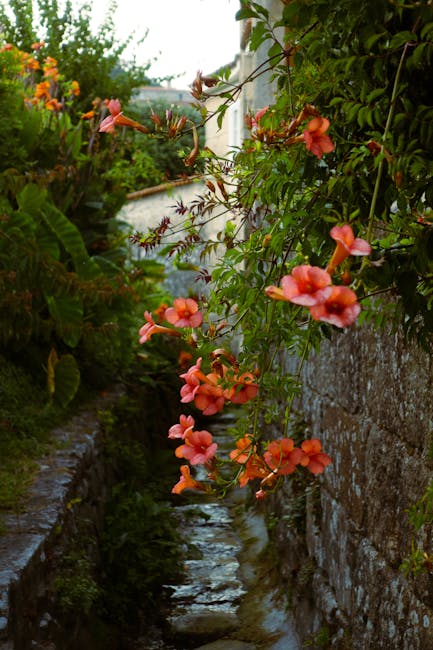
Sitting on a tuff cliff at the Umbria-Lazio border, Orvieto is an essential stop for anyone seeking a town literally perched on rock. Address: Duomo di Orvieto, Piazza del Duomo, 34, 05018 Orvieto TR, Italy. The Duomo of Orvieto (Cathedral of Santa Maria Assunta) is famed for its polychrome Gothic façade and the Chapel of the Corporal, which houses the cloth tied to the Eucharistic miracle. Hours: the cathedral is usually open 09:00–18:30; combined tickets for the Museo del Duomo and the Torre del Moro run around €7.00–€10.00.
Immersive experience: wander the Piazza del Duomo early in the morning, take the funicular (Piazza Cahen, 05018 Orvieto TR) down to the valley or to the train station. Don’t miss the Orvieto Underground (Orvieto Sotterranea): a network of caves and tunnels carved into the tuff; tickets about €8.00–€10.00, tour lasting roughly 1 hour. Medieval lanes host artisan shops (local ceramics workshops) and small osterie where you can taste the local white wine, Orvieto Classico.
Tips: for an unforgettable view, head to Via del Duomo late in the afternoon and look for a café with a terrace. Osteria del Grifo (Via del Duomo 10, 05018 Orvieto TR) serves traditional dishes: average price €20–30 per person. Parking: Parcheggio del Duomo (Via della Cava) is convenient but paid; daily rates vary €3–10 depending on season. In summer, favor early-morning or late-afternoon visits to avoid heat and crowds.
Gubbio — Medieval escarpments and the panorama from Piazza Grande
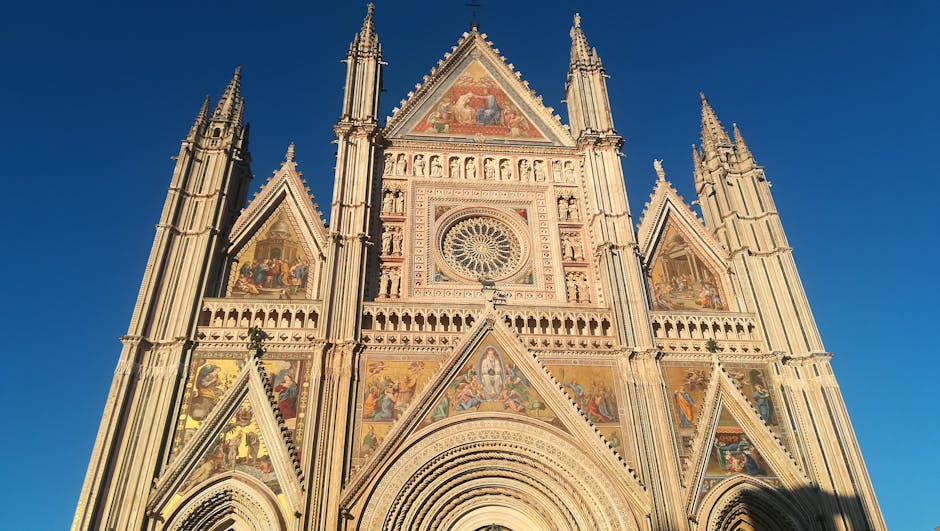
Gubbio is one of the best examples of a mountain town clinging to the slope. Address: Piazza Grande, 06024 Gubbio PG, Italy. The spectacular elliptical Piazza Grande looks out over a patchwork of roofs and forests. At its edge, the Palazzo dei Consoli (no. 1, Piazza Grande) houses the Civic Museum: hours usually 09:00–19:00; admission roughly €6.00–€8.00. From the piazza, stairways and alleys drop into the old town, revealing cobbled streets that evoke another era.
Recommended visits: take the funivia (cable car) up to the Sanctuary of Madonna della Cima for an aerial view of Gubbio and the valley (Funivia address: Via Paolo Pasqui 7; seasonal hours; round-trip fare €3.00–€5.00). Explore the Basilica of Sant’Ubaldo (Piazza San Ubaldo, 06024); local pilgrimages and medieval festivals (like the May Corsa dei Ceri) provide a powerful cultural experience.
Local tips: lunch at Trattoria del Sole (Via dei Consoli, 16, 06024 Gubbio PG) for regional cooking — game dishes and homemade pasta; budget €18–30. The steep alleys can be demanding: wear good shoes and carry water, especially in summer. The morning market is a chance to buy fresh produce and cheeses — look for formaggio di fossa, a regional specialty.
Todi and Montefalco — Between bell towers and vineyards
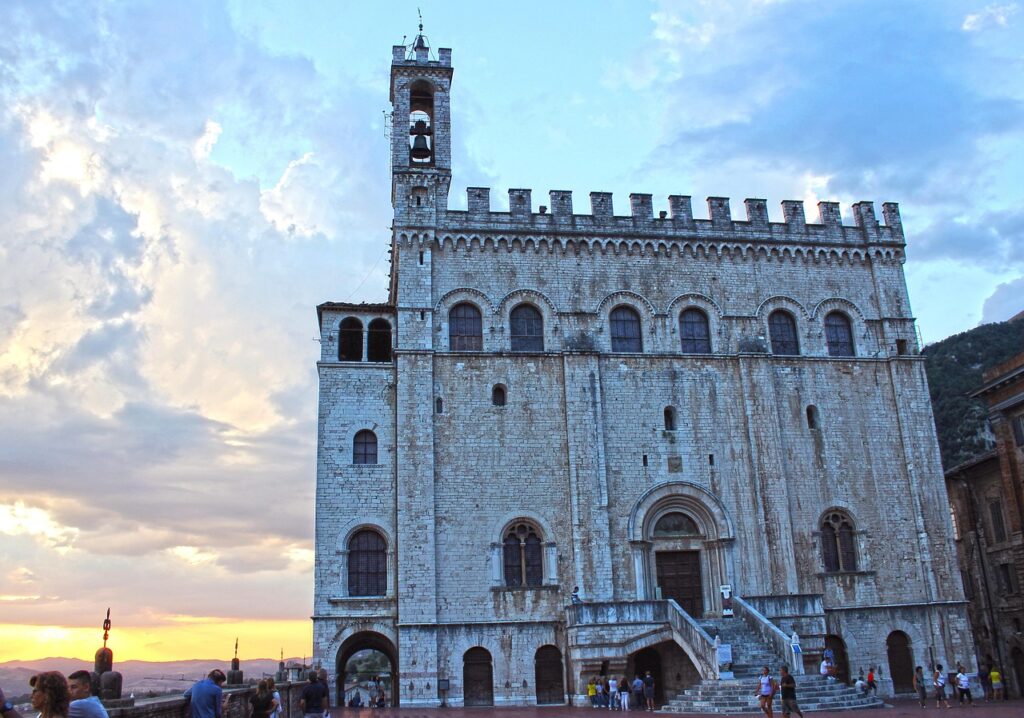
Todi and Montefalco are two suspended villages that show the close relationship between hill towns and winemaking territory. Todi, known for its Piazza del Popolo, sits on a ridge with wide views over the Tiber valley. Address: Piazza del Popolo, 4, 06059 Todi PG, Italy. The piazza, framed by medieval palaces and arcades, is a great place to observe Italian urban geometry. Municipal museum hours: often 09:00–17:00, tickets €4.00–€6.00 depending on the site.
Montefalco, nicknamed the “balcony of Umbria,” sits above vineyards that produce the famous Sagrantino di Montefalco. Main address: Piazza del Comune, 06036 Montefalco PG, Italy. Visit the Museo di San Francesco (Via Concezione 1) to see frescoes and local history; seasonal hours, entry about €5.00. Tastings: several wineries offer Sagrantino tastings starting at €10.00 for a basic session; Cantina Arnaldo Caprai (Via Gabbare, 9, 06036) is a well-known option (reservation recommended).
Practical tips: combine Todi and Montefalco in one day to balance urban heritage with vineyard tastings. In Todi, climb to the Tempio di Santa Maria della Consolazione (Piazza della Consolazione, 15) for Renaissance architecture and countryside views; entry is often free or by donation. In Montefalco, book a tasting for late afternoon when the light gilds the hills. Parking: peripheral lots and short uphill walks; use compact cars on narrow roads.
Logistics, where to stay and local food
Planning a “bell towers to valleys” route requires a few practical choices. The easiest option is to rent a car: scenic secondary roads link the villages but can be narrow and winding. Rental agencies are available in Perugia (San Francesco d’Assisi Airport, Via E. Mattei 1, 06132) and in Foligno. Indicative rental costs: €35–70 per day depending on season and vehicle class. For parking, favor signed Parcheggio areas outside historic centers; many are free or inexpensive (€2–8 per day).
Where to stay: for an authentic experience, book agriturismi (farm stays) or small boutique hotels. Examples: Albergo San Pietro (Piazza San Pietro 7, 06081 Assisi PG), indicative rates €80–150 per night depending on season; Relais La Corte dei Papi (Piazza del Popolo, 4, 06059 Todi PG), €90–160 per night. For tighter budgets, local bed & breakfasts often offer very good value (€50–90).
Food: Umbria is a land of olive oil, Castelluccio lentils, cured meats and cheeses. Try torta al testo (flatbread baked on a hot stone), pici (local pasta) and Sagrantino wine. Dining budget: simple trattoria €12–20 per person, mid-range osteria €20–35, fine dining €40 and up. Buy supplies (cheeses, oil, jams) at local markets for unforgettable picnics on scenic overlooks.
Conclusion — Between bell towers and valleys: a journey suspended in time
The “Bell Towers to Valleys” itinerary in Umbria offers a rich, nuanced discovery of a landscape where history and nature answer one another. Traveling through Assisi, Spello, Orvieto, Gubbio, Todi and Montefalco, you’ll alternate contemplative moments with human encounters: artisans, winemakers, parish priests and shopkeepers. These suspended villages retain an intact atmosphere, where every bell tower marks the hour and every valley tells the geography of people’s labor.
This guide has given you precise addresses, indicative hours and prices in euros to help plan your trip. Local tips — best times to visit, culinary specialties to try, recommended parking — are designed to optimize your time on site and preserve an authentic experience. Remember that Umbria rewards those who take the time: its narrow roads lead to panoramas that only the patient truly appreciate.
Finally, let yourself be carried by the unexpected: a village festival, an open artisan workshop, a tasting at a volunteer winemaker’s cellar can turn a stop into a lasting memory. Respect the places, support small local businesses and embrace slowness. Umbria’s suspended villages are waiting for your curiosity and patience to reveal their finest secrets — between stone, bell and valley.