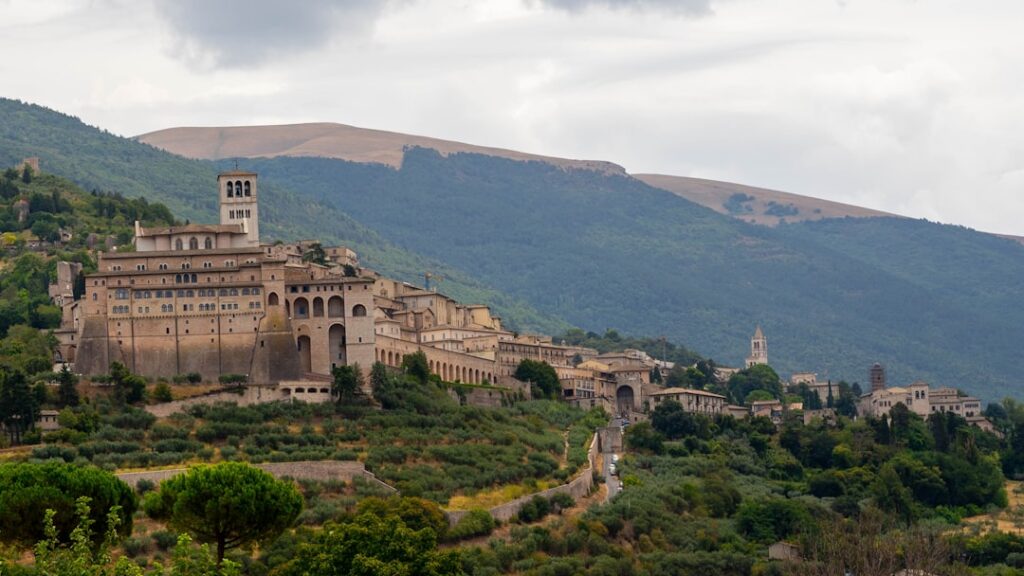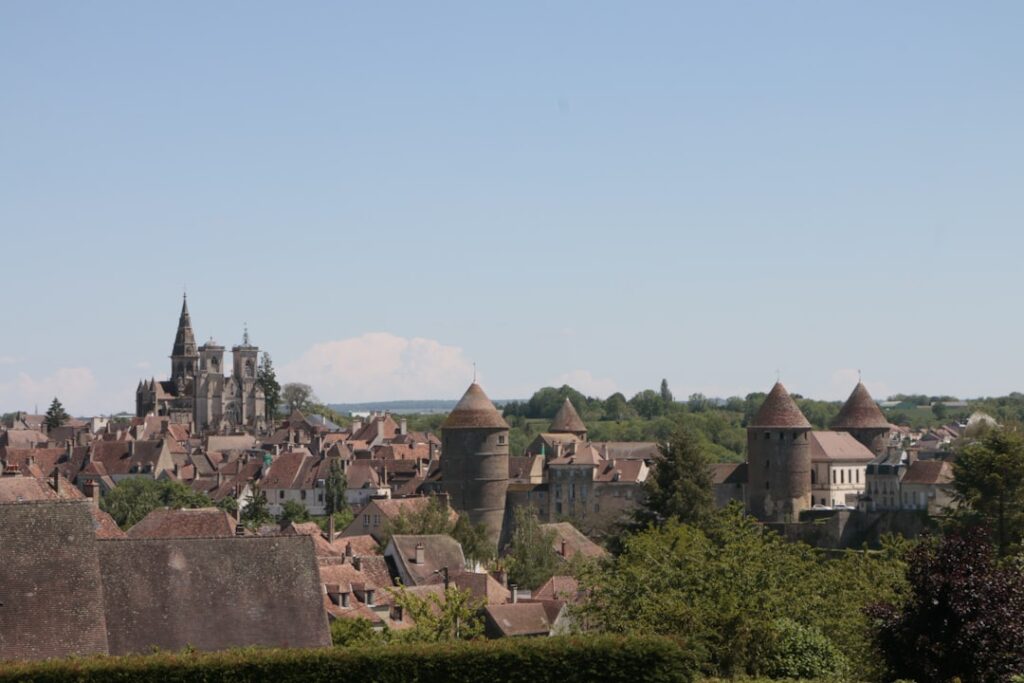






Introduction — Hidden borgo: medieval passageways and sweeping panoramas in Umbria
Umbria, Italy’s green heart, is dotted with intimate hilltop villages where time seems to slow down. The idea of a « hidden borgo » calls to mind medieval settlements of weathered stone, narrow winding lanes and outlooks that open onto olive-covered hills and vineyard-draped valleys. This guide walks you through an immersive route across those places, focusing on medieval corridors — vaulted walkways, staircases hewn from rock, covered alleys — and on viewpoints that serve up jaw-dropping vistas of the Umbrian countryside. You’ll find full practical details: addresses, opening hours, ticket prices and hands-on tips to get the most from every stop.
Exploring Umbria reveals well-kept secrets: ornate gateways, forgotten loggias, walled hanging gardens and, above all, an atmosphere that invites quiet contemplation. The medieval corridors, often cool and shaded, connect a small piazza to a panoramic terrace in a few twists and turns, each corner revealing a façade painted with old frescoes or a patina of age that tells stories. The viewpoints reward your wandering: golden valleys at sunset, terracotta roofs threaded with cypresses, and the silhouette of Umbrian hills set against ever-changing skies.
This guide gives detailed strolls through emblematic borgos like Spello, Montefalco, Bevagna and Spoleto, plus lesser-known spots, practical addresses (bars, restaurants, parking) and seasonal advice. You’ll learn where to catch the best views, the ideal time of day for the light, how much a fortress or chapel visit costs, and how to dodge the crowds without losing the soul of a place. Whether you’re a photographer hunting for the perfect angle, a slow traveler who savors leisurely pace, or a foodie aiming to finish a walk with pasta and a glass of Sagrantino, you’ll get a coherent, detail-rich itinerary.
For each location you’ll also find local practical tips: where to park to reach the medieval corridors without a long climb, what shoes to wear on uneven cobbles, which seasons bring the most vivid colors, and how to respect residents and heritage sites during your visit. Get ready to explore a private-side Umbria where every corridor holds a story and every panorama invites daydreaming.
Spello and its flower-filled passages: keep it low-key
Perched on the hills southeast of Perugia, Spello is famous for its flower-strewn lanes and medieval gates. Start your walk at Porta Consolare (Via Consolare, 06038 Spello PG), one of the Roman entrances still visible today. The historic center begs to be wandered: follow Via Giulia and lose yourself in the vicoli (narrow lanes) flanked by stone houses. The village preserves numerous vaulted corridors connecting the piazzas — for example the Corridore di Santa Maria, a covered passage that opens onto Piazza della Repubblica.
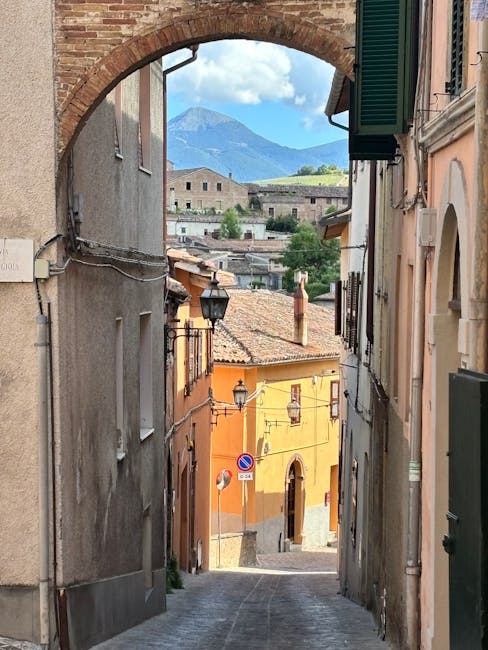
Practical info: the Ufficio Informazioni Turistiche di Spello (Piazza della Repubblica, 1, 06038 Spello PG) is open Monday to Saturday from 9:00 to 13:00 and 15:00 to 18:00. Free entry. For a cultural experience, Chiesa di Santa Maria Maggiore (Via Della Macchia, 06038 Spello PG) displays Pinturicchio frescoes; admission is free but donations of €2–€5 are suggested for upkeep. Most lanes are accessible 24/7, but note shops typically close between 13:00 and 16:00.
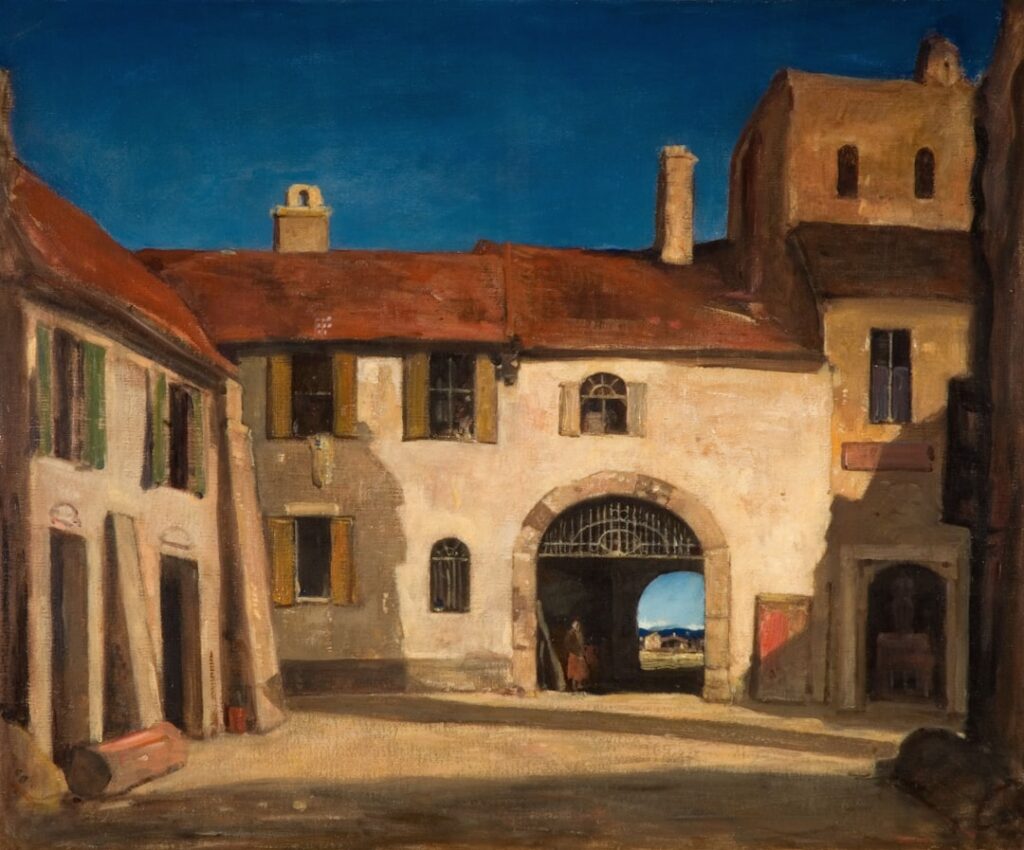
Tips: park at the Parcheggio Campo Boario (Via Campo Boario, 06038 Spello PG) — paid parking roughly €1.50 per hour; it’s an 8–12 minute walk to the medieval core. Wear sturdy walking shoes: the stones are uneven and slippery when wet. Visit early in the morning to enjoy mostly empty corridors and soft light on the façades. Don’t miss the panoramic terraces along Via dei Cappuccini for Topino Valley views at sunset.
Montefalco: vineyard panoramas and brotherhood passageways
Nicknamed the « balcony of Umbria, » Montefalco serves up wide views over Sagrantino vineyards. The old borgo, centered around Piazza del Comune (Piazza del Comune, 1, 06036 Montefalco PG), is a maze of narrow streets where medieval corridors link municipal palaces and former religious confraternities. The atmosphere is defined by warm stone walls and artisan shops opening onto peaceful inner courtyards.
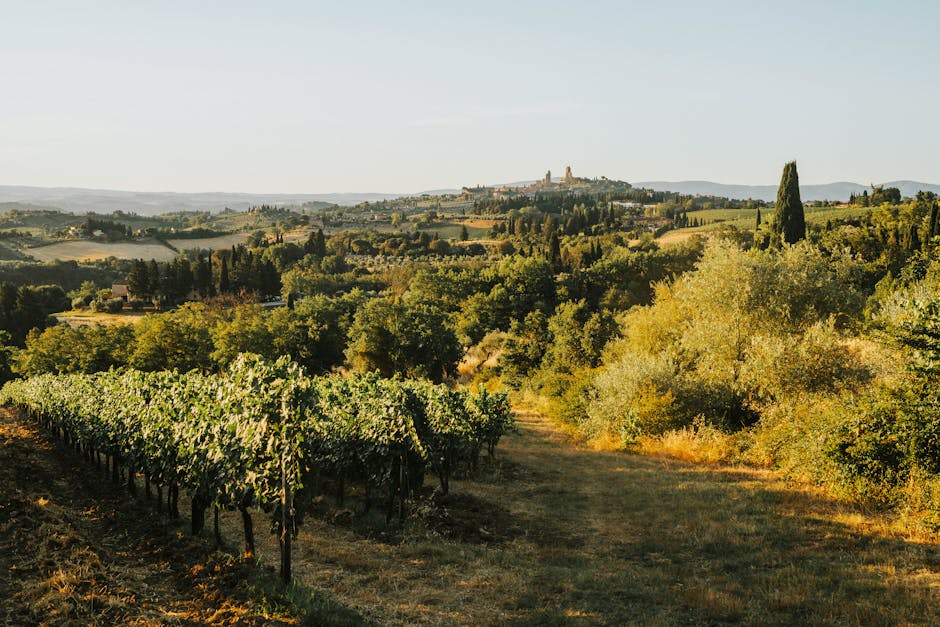
Must-sees: Chiesa di San Francesco (P.zza San Francesco, 5, 06036 Montefalco PG) houses frescoes by Benozzo Gozzoli; open daily from 9:00 to 19:00; admission: €6 for the full museum complex. The Museo Civico di Montefalco (Via del Municipio, 06036 Montefalco PG) showcases local works; hours: 10:00–13:00 and 15:00–18:00, closed Tuesdays; ticket: €5 (reduced €3). Montefalco is ideal for pairing historic corridors with wine tasting: Enoteca Montefalco (Via Guglielmi, 12, 06036 Montefalco PG) offers Sagrantino tastings from about €8 per person.
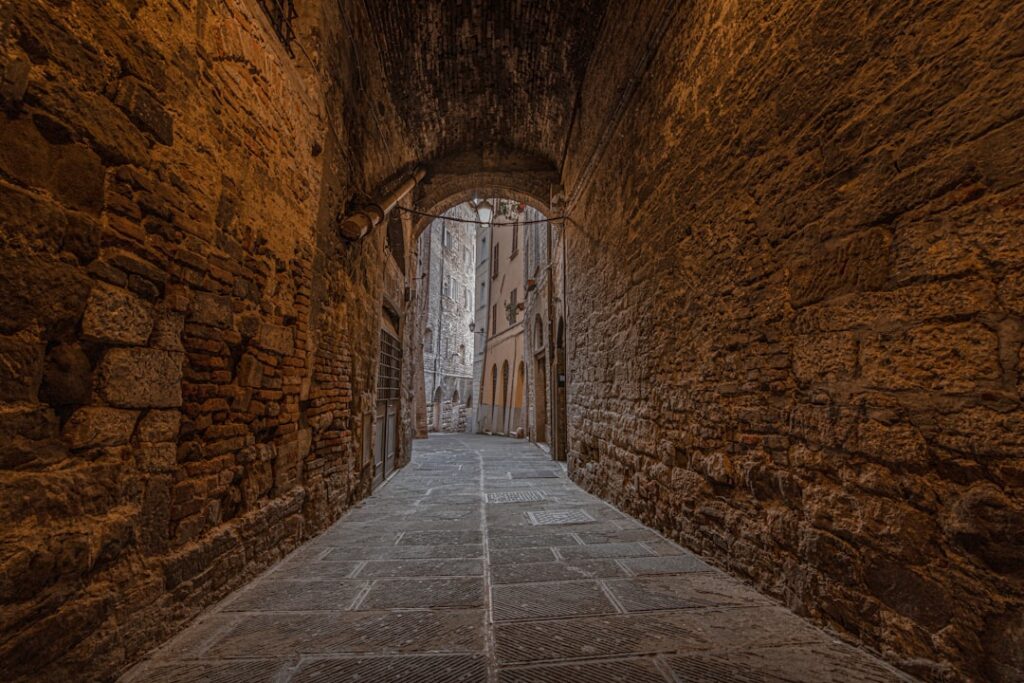
Tips: aim for late afternoon to catch the golden light on the vineyards. The Parcheggio Comunale (Via Roma, 06036 Montefalco PG) sits at the borgo entrance; rates: €2 per hour, day rate €8. Montefalco is bikeable, but watch for cobbles and steep slopes — opt for an e-bike if you’re not fit. For a deeper dive, ask tourist offices about guided convent tours; they typically last 60–90 minutes and cost €10–€15 per person. Respect mass times and local ceremonies: some corridors remain in active use by confraternities during processions.
Bevagna and Spoleto: medieval architecture, arcades and valley views
Small but rich in Roman and medieval remains, Bevagna is a textbook hidden borgo where corridors intersect beneath arcades. Start at Piazza Silvestri (Piazza Silvestri, 06031 Bevagna PG), then wander the lanes toward Chiesa di San Michele (Via San Michele, 06031 Bevagna PG). The vaulted passages that lead to main squares are often lit by old lanterns and marked with plaques telling local stories.
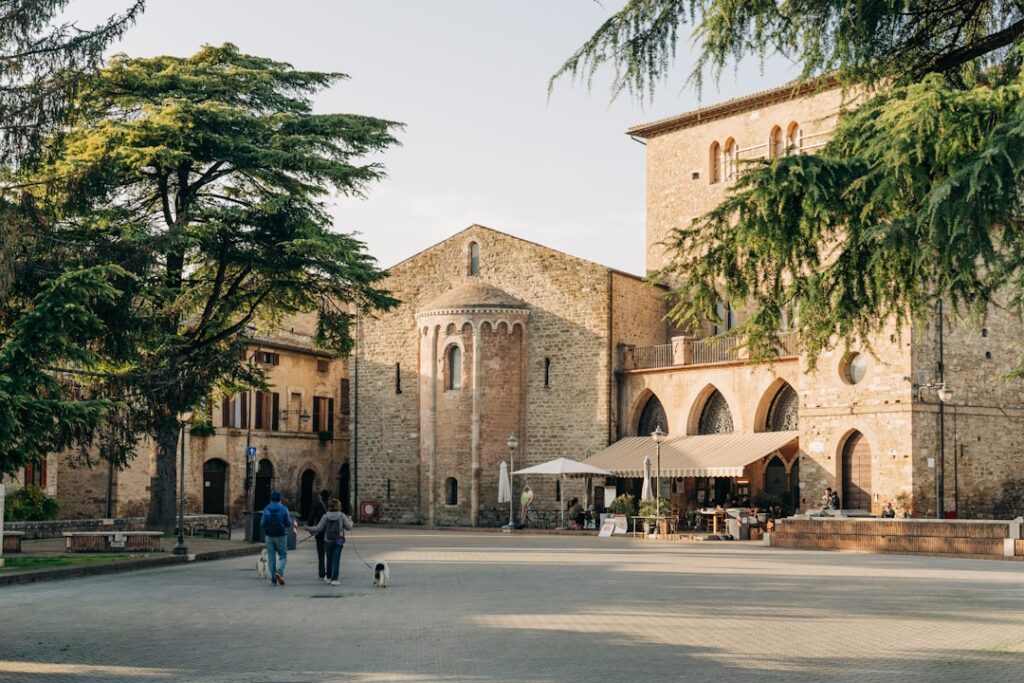
Visits and info: the Area Archeologica di Bevagna (Via San Francesco, 06031 Bevagna PG) is open Wednesday to Sunday from 10:00 to 17:00; admission €4, reduced €2. Bevagna’s medieval market (Mercato delle Gaite) usually takes place in June and features living-history demonstrations and local crafts (ticketed event, €10–€18 depending on shows). For vistas, climb toward Porta Romana and follow the paths into the countryside: you’ll find viewpoints over the Clitunno plain.
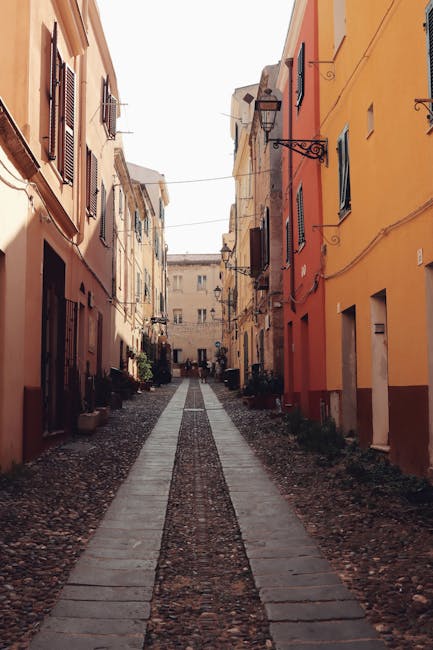
Spoleto, about a 30-minute drive from Bevagna, is crowned by the Rocca Albornoziana (Piazza della Rocca, 06049 Spoleto PG). The fortress offers spectacular views over the Tessino valley and the town’s red roofs. Entry to the Rocca is around €7 (reduced €5); hours: 9:00–19:00 (sometimes closed on Mondays in low season). Spoleto’s medieval quarter is famed for covered corridors leading to the Duomo di Spoleto (Cattedrale di Santa Maria Assunta) (Piazza Duomo, 06049 Spoleto PG), open for visits from 8:30 to 18:00; interior visits are free, though small contributions of €1–€3 are appreciated for conservation.
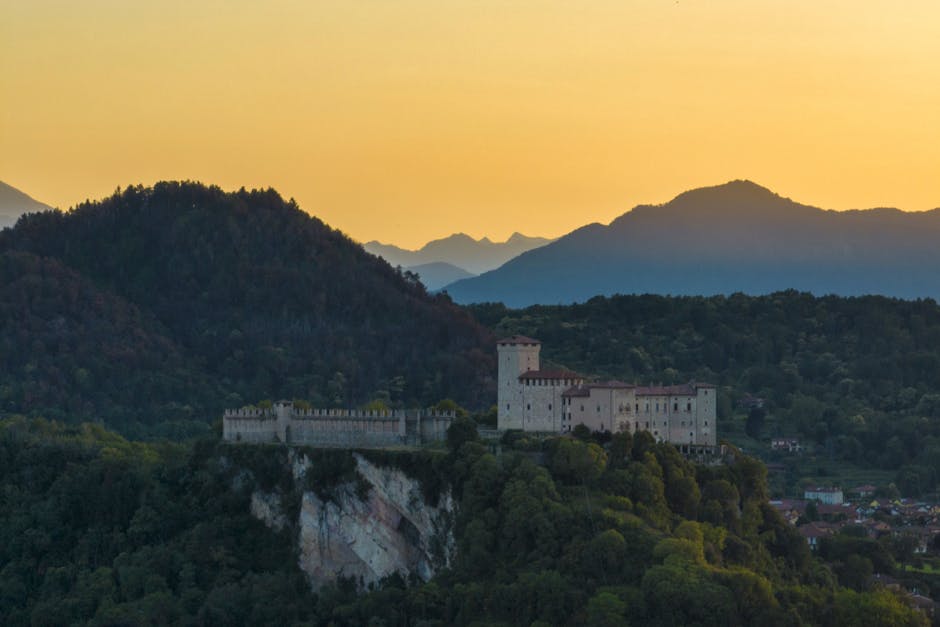
Tips: for Bevagna and Spoleto, split your day between morning and late afternoon to avoid the hottest hours in summer. Regional buses (AST Umbria) connect the two borgos; a single ticket costs roughly €2.50–€4.00 depending on distance. In Spoleto, walk up to the Rocca via Via dei Convegni to pass several historic corridors and enjoy one view after another; the climb requires decent fitness but offers shady benches and fountains along the way. Respect signs reading « proprietà privata » and avoid unmarked paths crossing private land.
General practical tips for exploring Umbria’s hidden borghi
Setting out to discover Umbria’s hidden borghi needs only a little practical preparation. The region is threaded with winding secondary roads; choose a compact car for easier maneuvering through narrow lanes and simpler parking. Below is a detailed checklist to optimize your visit and help preserve the authenticity of these places.
- Best time to go: spring (April–June) and autumn (September–October) bring mild temperatures, vivid colors and fewer tourists. Summer has festivals but also high heat and bigger crowds.
- Opening hours: many small churches and museums close between 13:00 and 15:00; plan visits for the morning or late afternoon. Artisan shops often open around 10:00 and close around 19:00, with a midday break.
- Budget: expect €5–€10 for small chapel or municipal museum entries, €6–€15 for major sites (castles, major museums), and €8–€20 for local wine tastings. A gelato or café on a terrace costs about €1–€2.
- Clothing & gear: closed, grippy shoes for cobbles; a reusable water bottle (there are many drinking-water points); hat and sun protection in summer. A light windbreaker is handy for exposed viewpoints.
- Local etiquette: don’t climb on restricted walls, don’t pick flowers in private gardens, and keep your voice low in small piazzas to respect residents.
- Photography: favor morning light and the evening golden hour for landscapes. Always ask permission before photographing inside private homes or taking portraits of elderly residents.
- Getting around: regional buses (AST Umbria) link main towns, but a personal car or rental gives the freedom to reach remote borghi. Communal parking is often paid (about €1–€2 per hour).
Conclusion — Preserve the borgo’s intimacy and savor the view
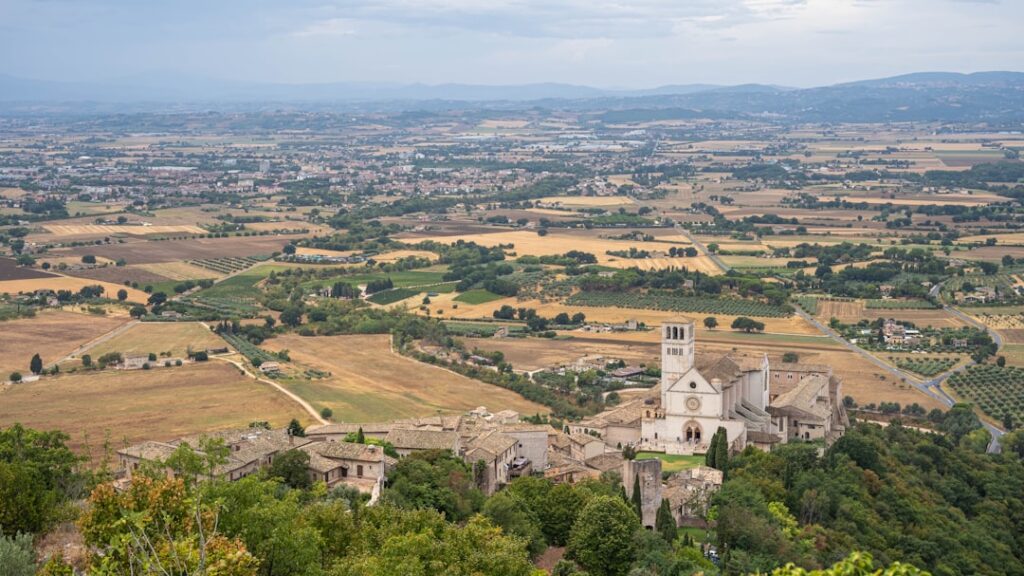
Exploring Umbria’s hidden borghi is an invitation to slow down: let curiosity lead you through cool, shaded medieval corridors and be surprised by sudden panoramas that feel like rewards for your patience. These villages — Spello, Montefalco, Bevagna, Spoleto and many more — offer a broad palette of experiences: masterful frescoes in modest churches, robust Sagrantino wine tastings, community events that transport visitors into medieval life, and viewpoints where the land, history and culture of a whole region become tangible.
To help keep the spirit of these places intact, remember a few simple rules: respect opening hours and sacred sites, leave no trace, and support local initiatives by buying from artisans or joining guided tours. Planning visits outside peak tourist periods not only gives you quieter views but also lets you observe daily life — how locals use corridors and piazzas — and hear local stories when a shopkeeper, museum or guide takes the time to share them.
Finally, remember every borgo has its secrets: a hidden door to a terrace, a stairway up to a forgotten chapel, a bench with the best sunset perspective. Bring a sense of wonder and the patience to uncover those treasures. Whether you’re a photographer, history buff, hiker or foodie, Umbria will welcome you with its medieval passageways and panoramas, inviting you to return season after season to discover new views and new silences.